
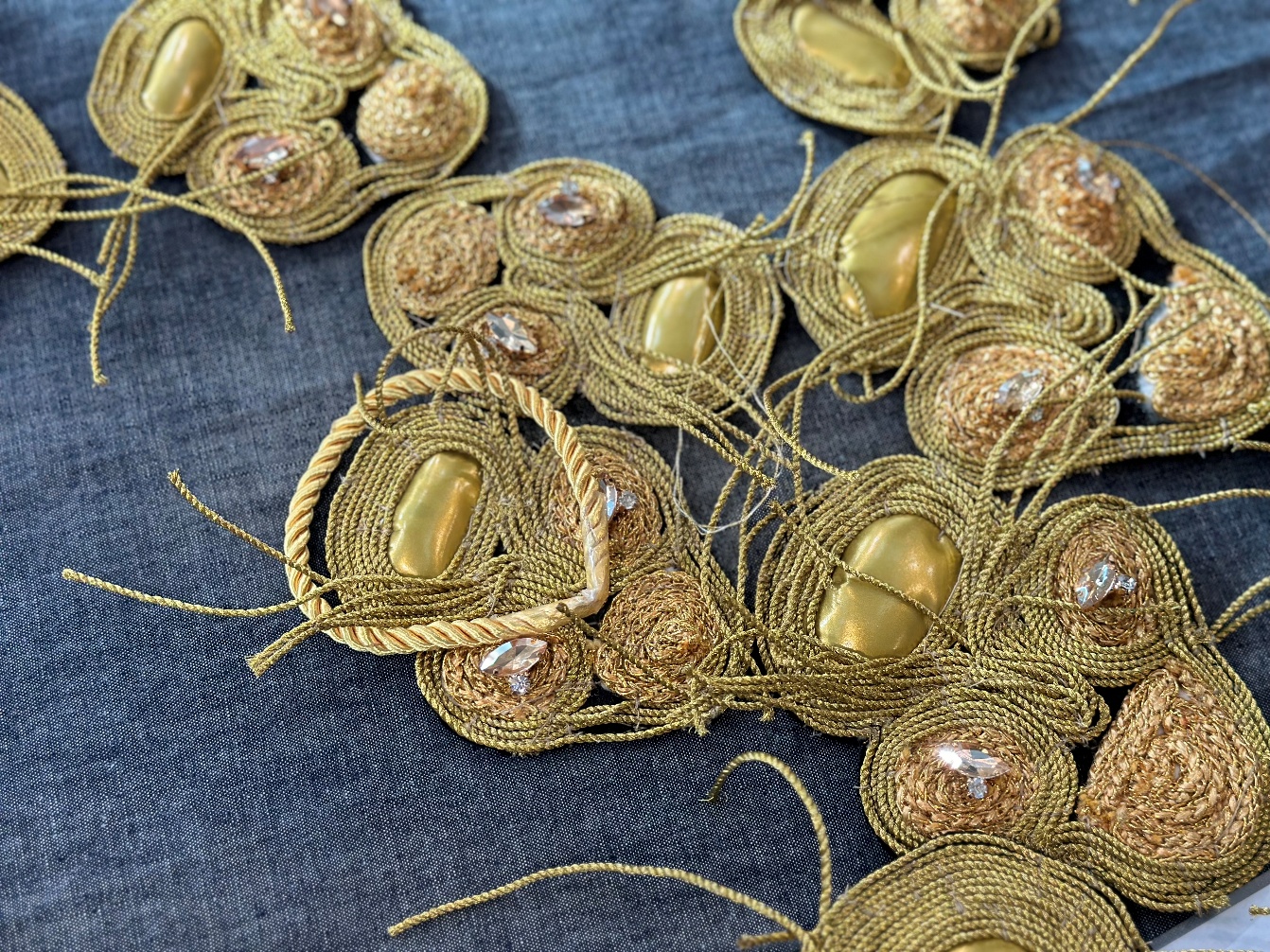
As I continue researching Renaissance art, Indian temple architecture, Māori carving traditions, and ceremonial objects from different cultures, I find myself returning to a simple question:
Why does ornament exist?
In contemporary design, ornament is often dismissed as decoration—something added after function has been resolved. Yet throughout history, ornament has carried far greater significance.
Across cultures, decorative motifs have served as vessels for storytelling, memory, identity, spirituality, and knowledge. Carved patterns, embroidered surfaces, architectural details, and symbolic forms often communicate information that words cannot. They record beliefs, honour ancestors, express values, and preserve cultural narratives across generations.
From the intricate carvings found in Māori meeting houses, to the symbolic geometry of Indian temples, to the elaborate decorative language of Renaissance architecture, ornament has consistently acted as a visual archive of human experience.
This research explores how ornament functions not simply as embellishment, but as a language. A language capable of carrying meaning across time, place, and culture.
As an artist working with wearable sculpture, I am particularly interested in how surface detail can become a form of storytelling. Through repetition, symbolism, texture, and construction, ornament transforms an object from something merely functional into something capable of carrying memory and meaning.
Perhaps ornament has never been about decoration at all.
Perhaps ornament is one of humanity’s oldest forms of storytelling.
