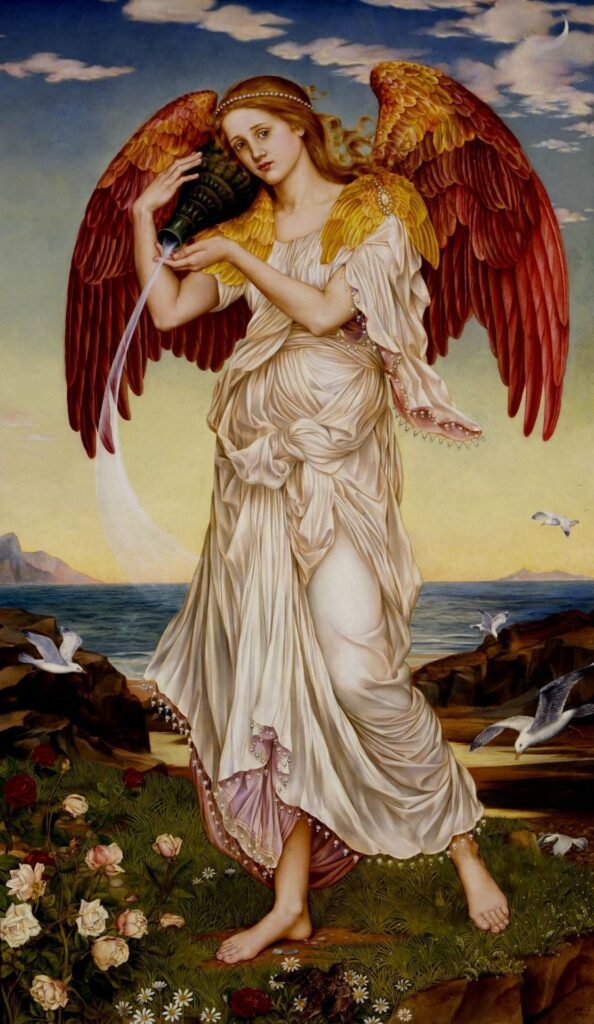
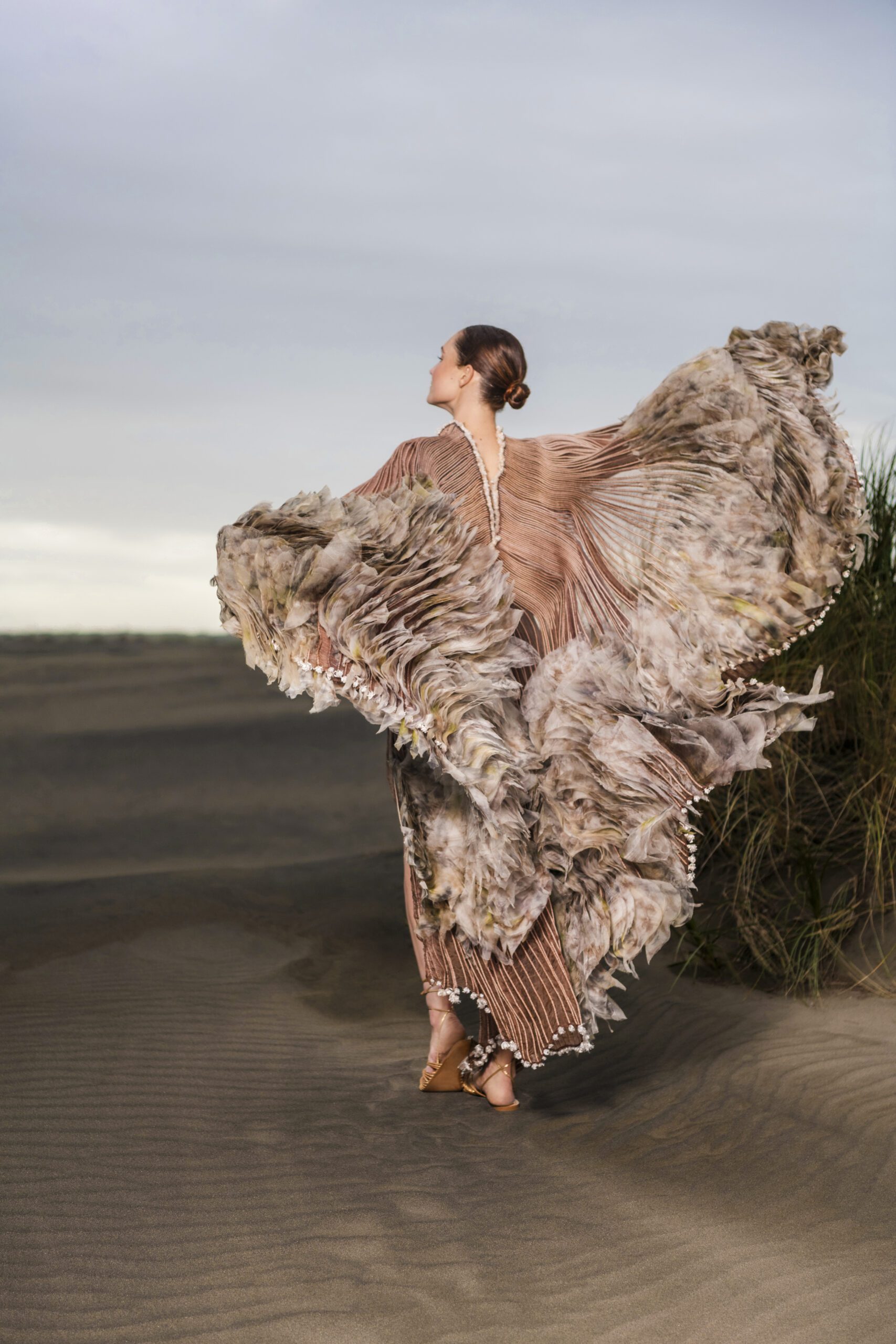
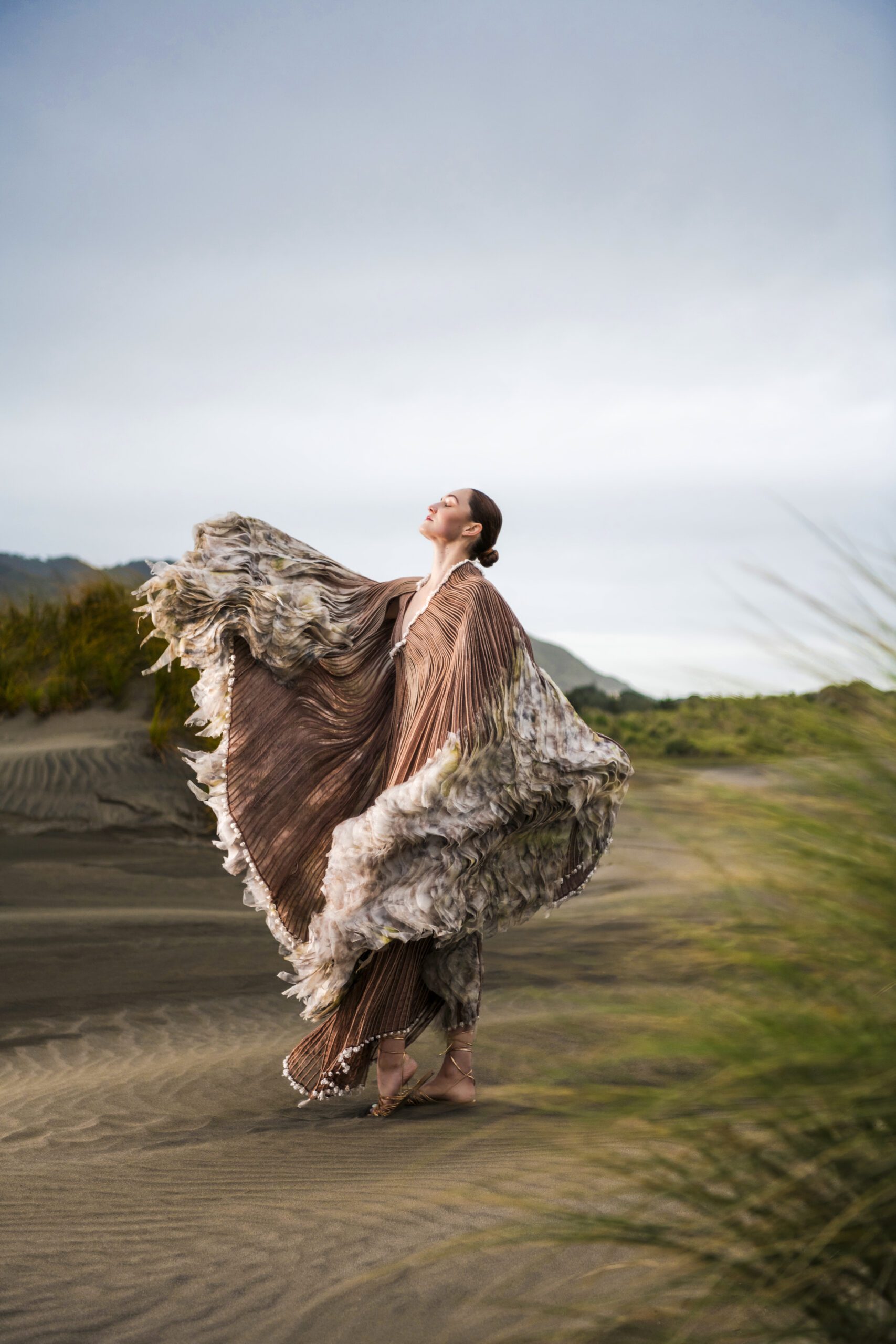
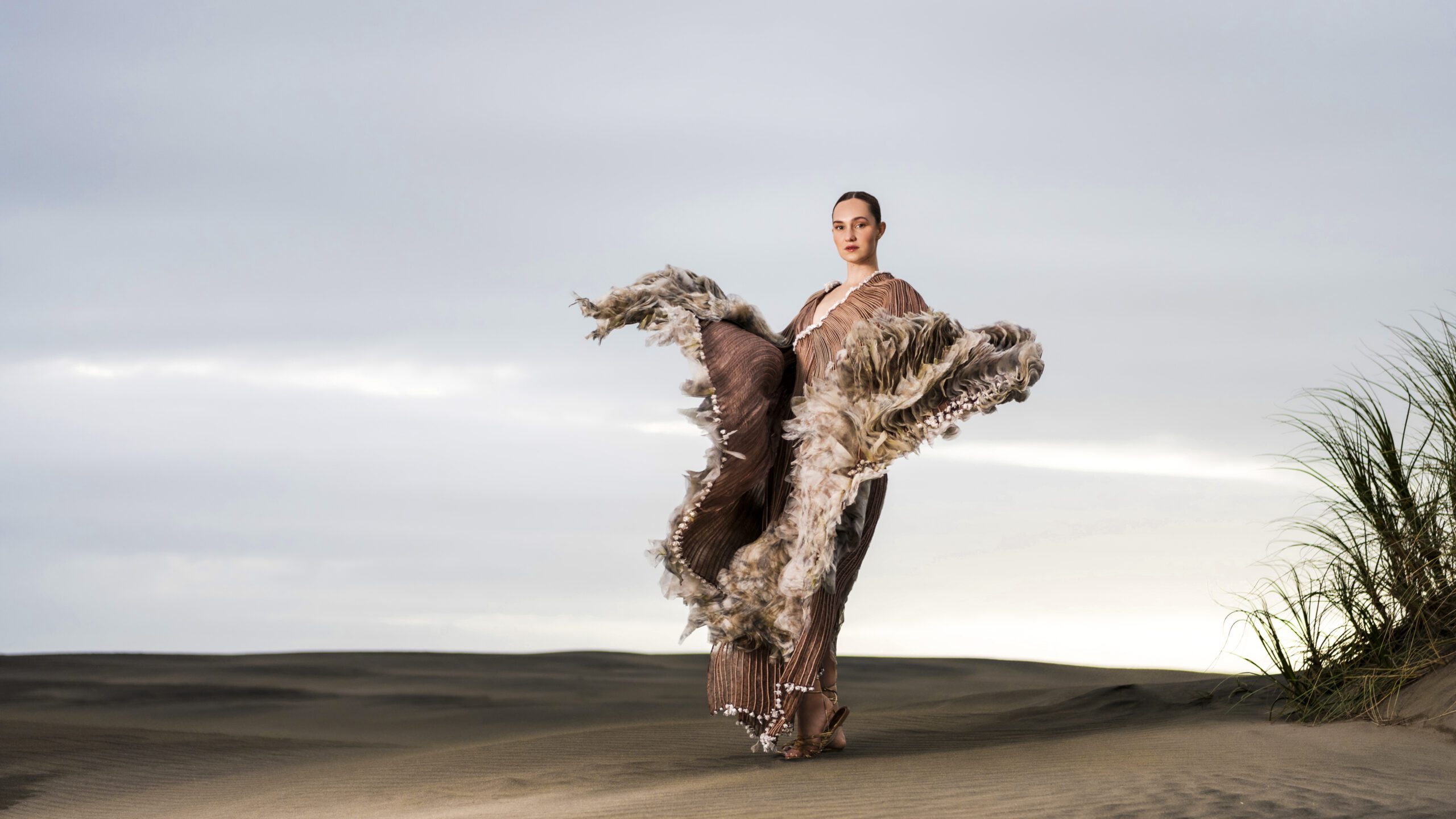
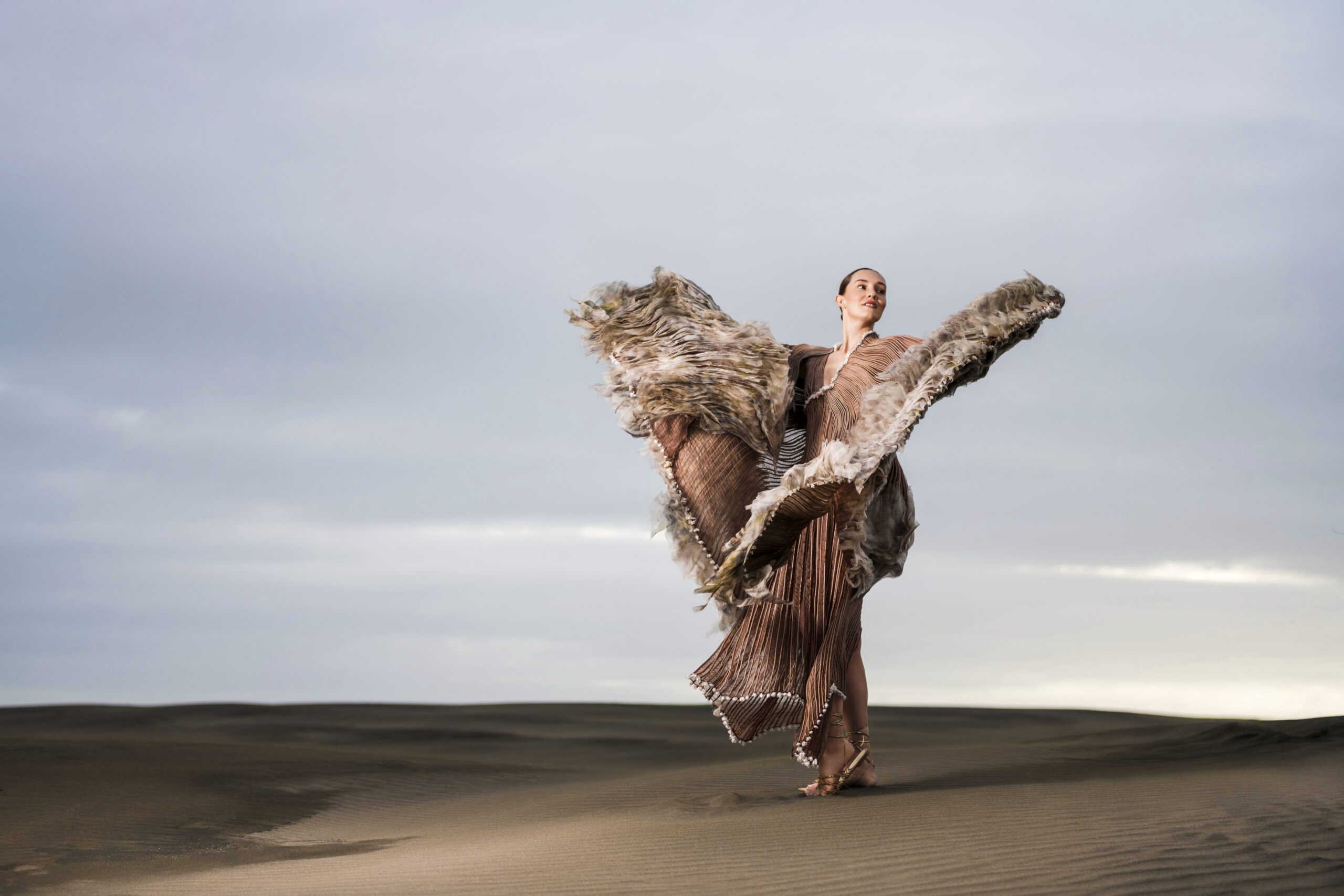
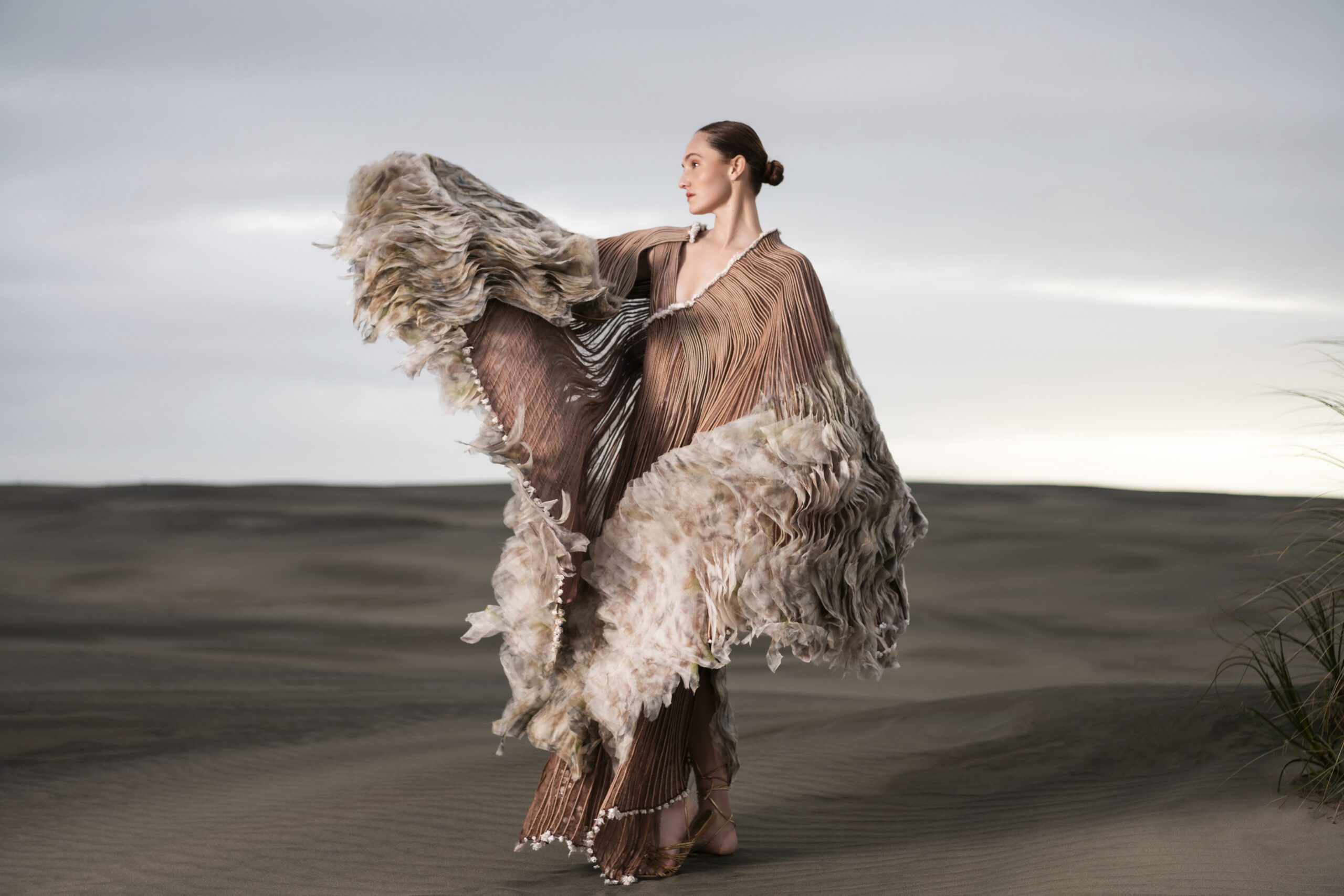
EOS began with an exploration of Eos, the ancient Greek goddess of dawn, whose arrival marks the transition between darkness and daylight. Her presence represents the first light of a new day, creating a moment between what has ended and what is about to begin.
In Greek mythology, Eos is associated with opening the heavens at the beginning of each day, preceding the arrival of the sun. Her recurring emergence at dawn became a compelling starting point for exploring ideas of renewal, transition, awakening, movement, and new beginnings. The cyclical nature of dawn also suggests the possibility of beginning again, making Eos a powerful symbol of hope, change, and continuous transformation.
Rather than attempting to reproduce the goddess through literal representation, the work considers dawn as a state of transformation—the gradual movement from one condition into another. This transition became a way of thinking about moments of personal and emotional change, when uncertainty begins to give way to clarity and stillness begins to develop into movement.
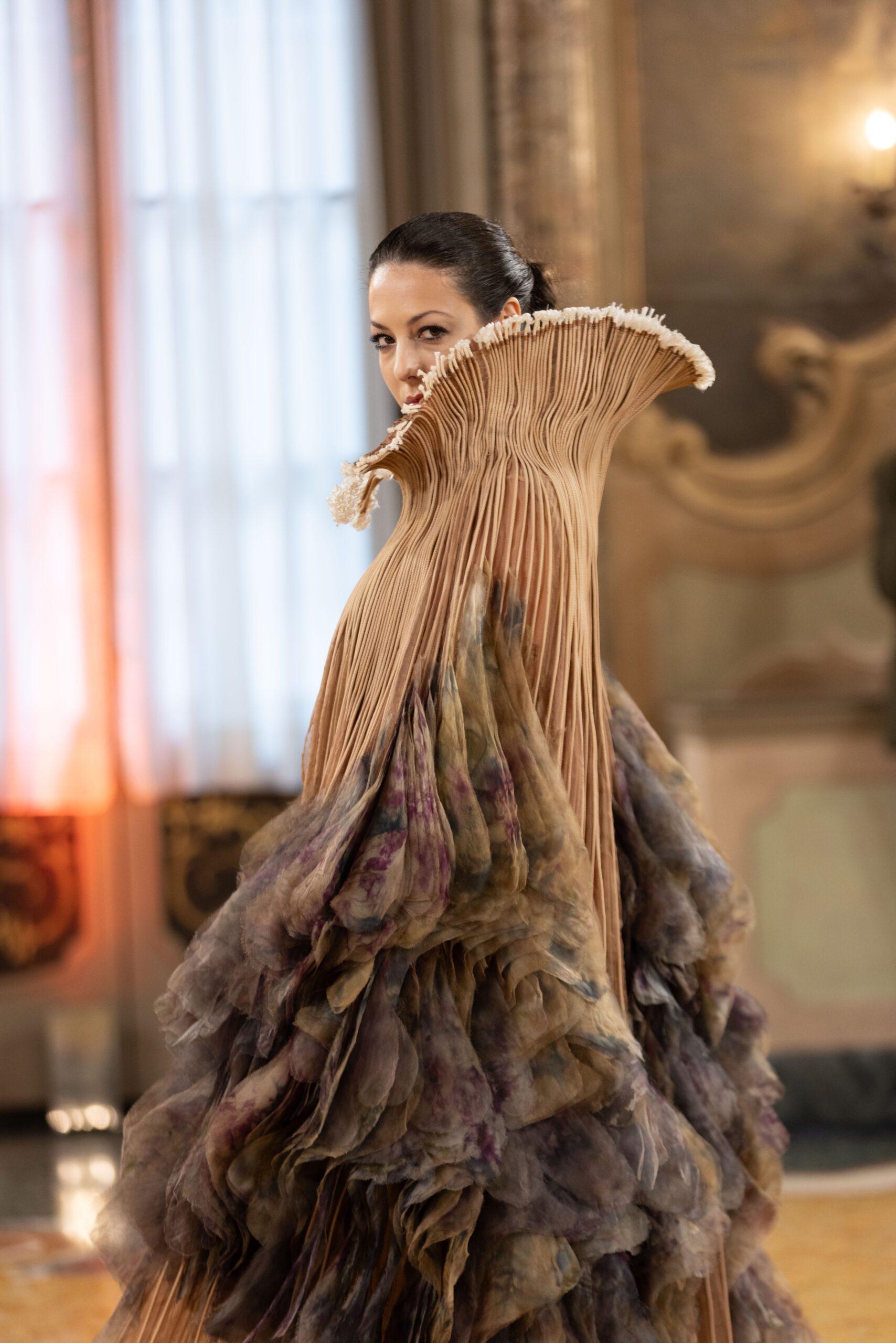
Light, colour, movement, and expanding sculptural forms became a means of interpreting this transition through wearable sculpture. The evolving silhouette reflects the gradual expansion of light across the horizon, creating a visual language of emergence, energy, and possibility. Through this approach, EOS transforms the mythology of dawn into a contemporary exploration of awakening, renewal, and the promise of a new beginning.
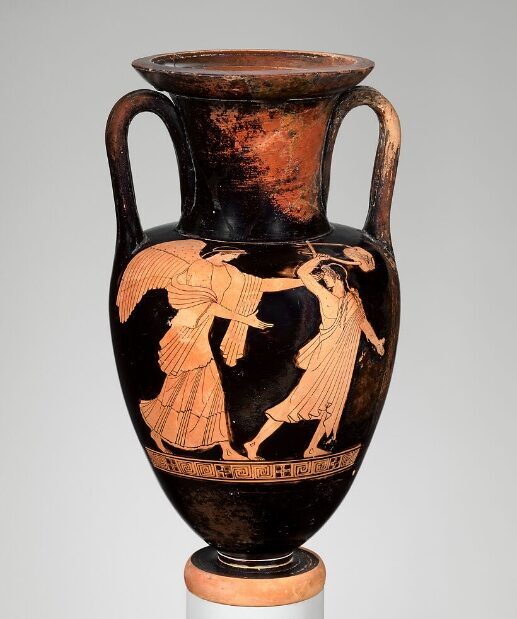
Eos, Goddess of Dawn, pursuing Tithonos
Attic red-figure Nolan neck-amphora, attributed to the Achilles Painter, c. 470–460 BCE. The Metropolitan Museum of Art, New York. Rogers Fund / Cesnola Collection exchange, 1925. Public Domain.
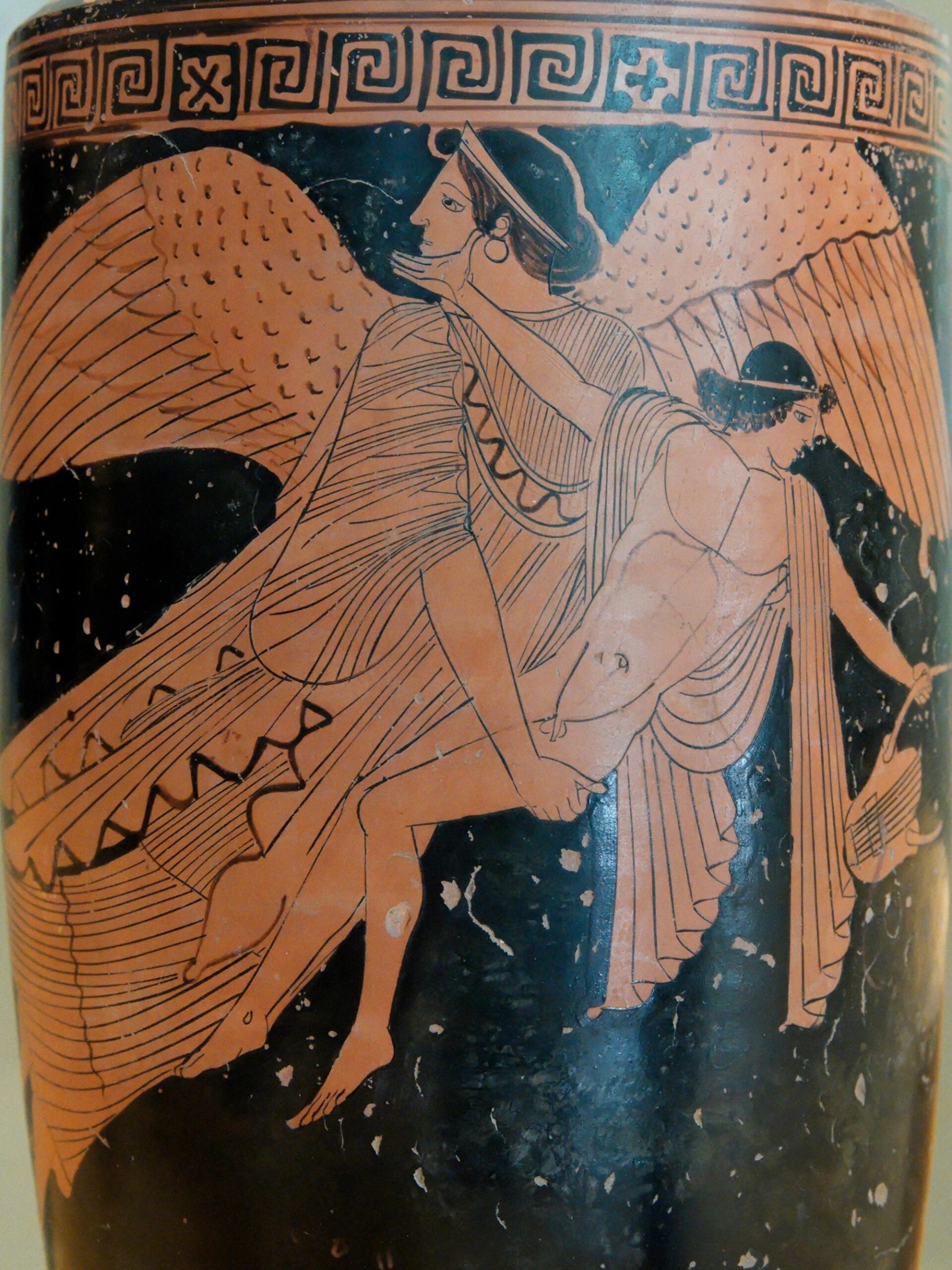
Eos, Goddess of Dawn, pursuing Tithonos
Attic red-figure Nolan neck-amphora, attributed to the Achilles Painter, c. 470–460 BCE. The Metropolitan Museum of Art, New York. Purchase, The Cesnola Collection, by exchange, 1925. Public Domain.
VISUAL INSPIRATION
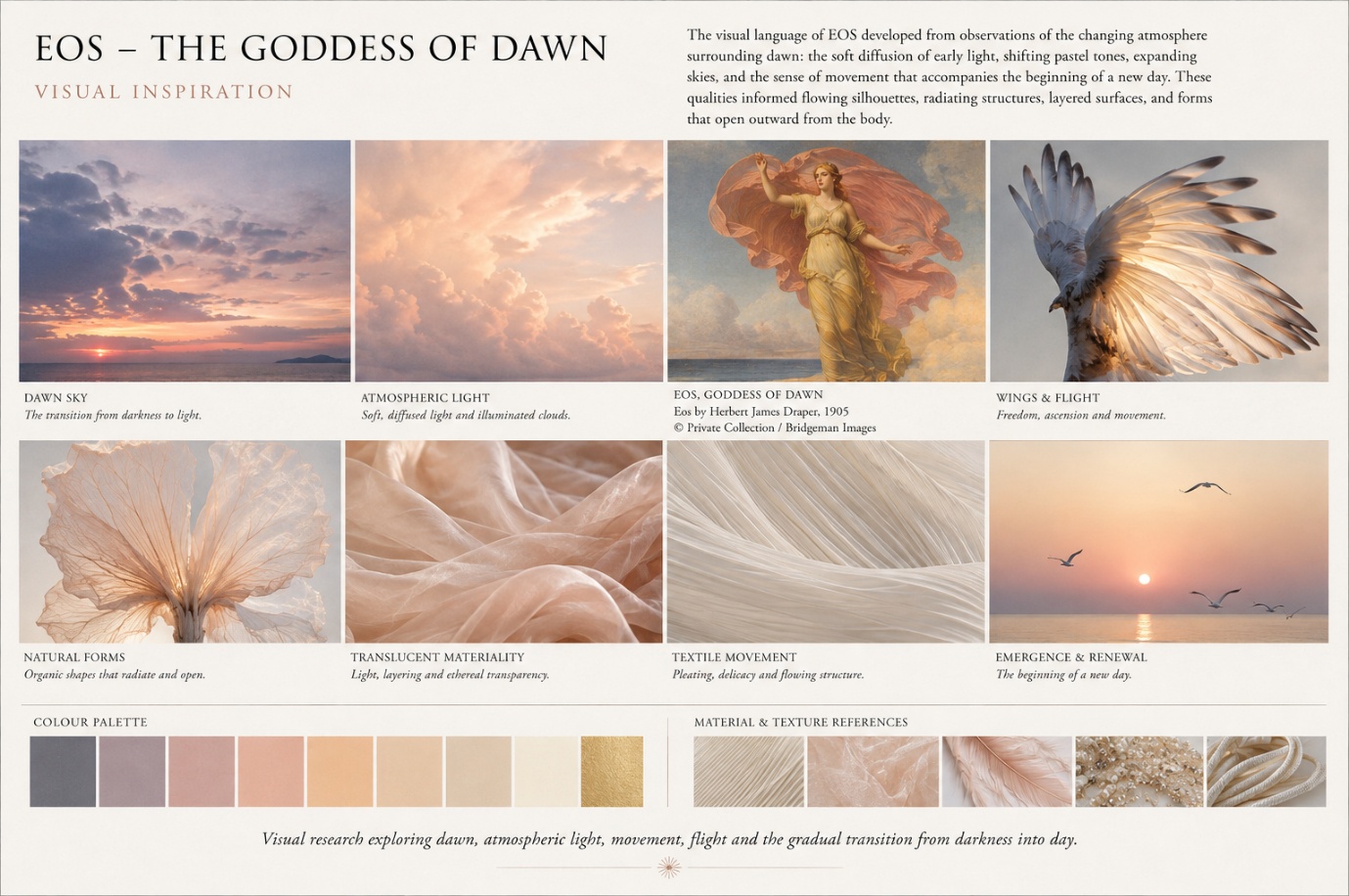
The visual language of EOS developed from observations of the changing atmosphere surrounding dawn: the soft diffusion of early light, shifting pastel tones, expanding skies, and the sense of movement that accompanies the beginning of a new day.
These qualities informed flowing silhouettes, radiating structures, layered surfaces, and forms that open outward from the body. References to wings and flight emerged through movement rather than direct imitation, allowing the sculptural forms to suggest freedom, emergence, and transition.
ARTIST REFLECTION
EOS represents an important early stage in the development of my sculptural practice. The project began with an interest in mythology, but through making, it became an exploration of how an ancient narrative could be translated through material, movement, and form.
The idea of dawn resonated with me as a moment of possibility—a threshold between what has passed and what is beginning. I became interested not in illustrating Eos herself, but in capturing the sensation associated with her arrival: expansion, lightness, movement, and renewal.
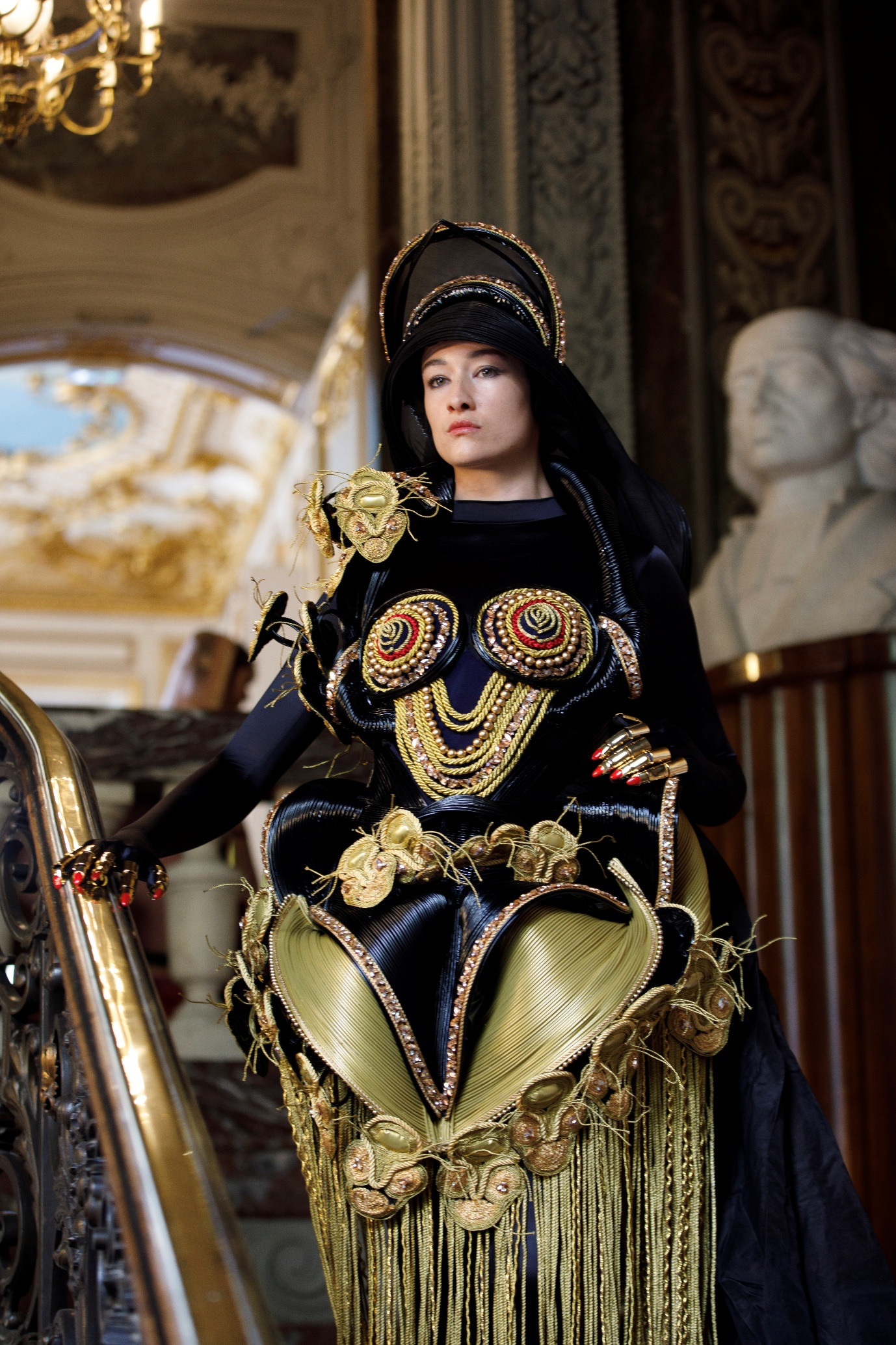
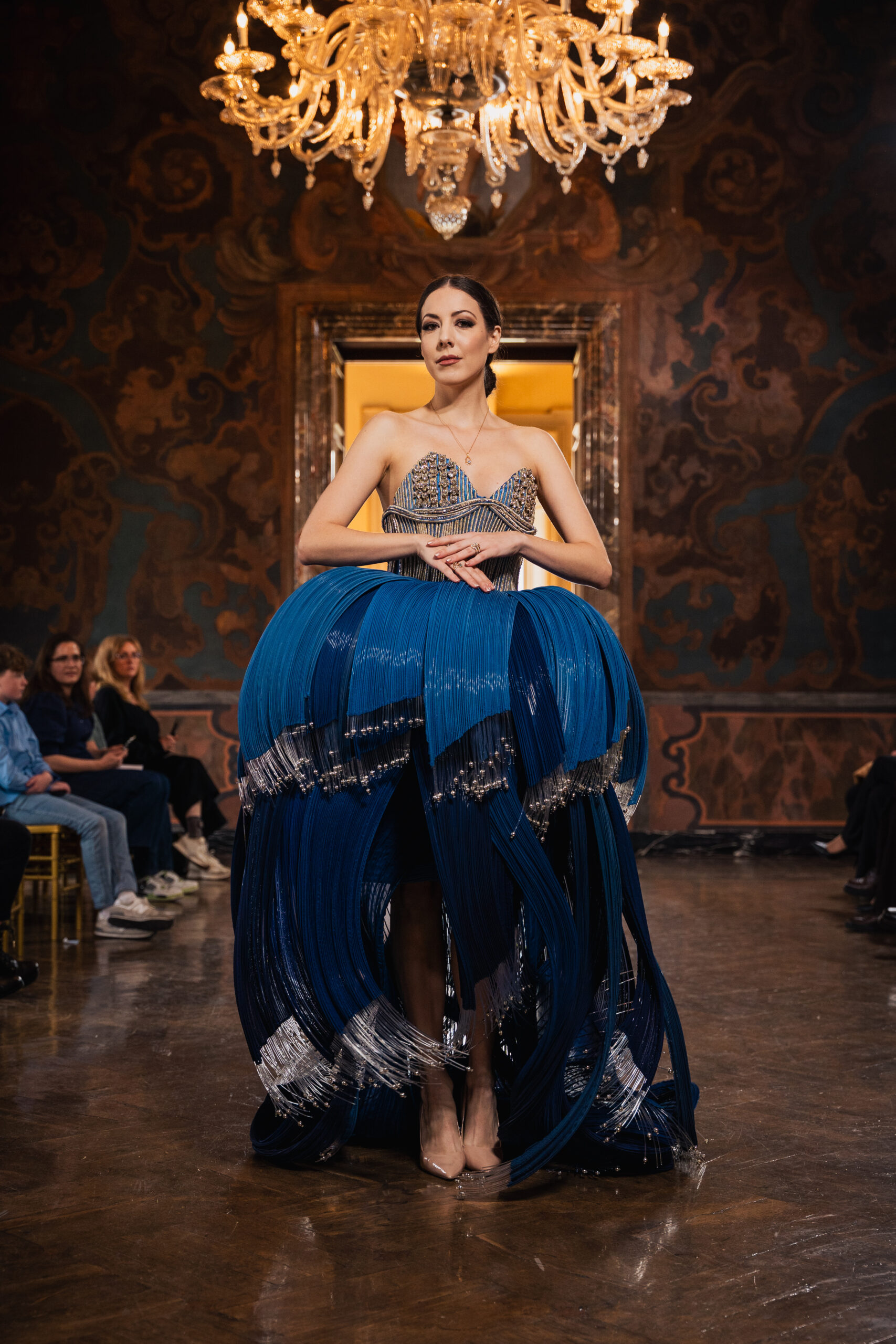
Through EOS, textile began to move beyond surface and increasingly became structure. Repetition, cord construction, pleating, layering, and hand manipulation allowed the material to occupy space around the body. This exploration became an important foundation for the more complex wearable sculptures that followed.
EOS IN THE ARCHIVE
Black Lioness
Moana
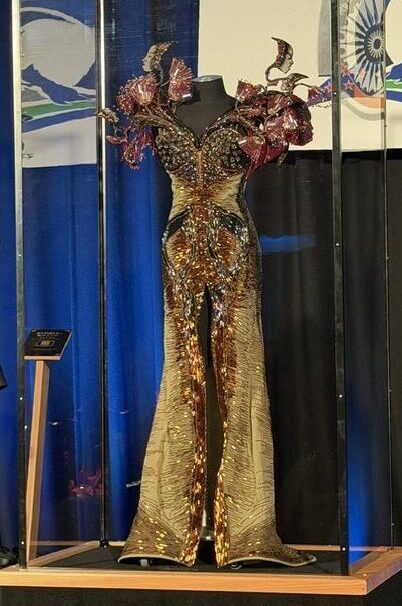
Reinga
Eos- The Goddess of Dawn
Spiritual Shift
Acknowledgement
EOS draws inspiration from the mythology and visual traditions of ancient Greece. The work is presented as a contemporary artistic interpretation rather than a reconstruction of historical or religious imagery, with respect for the cultural narratives that informed its development.