
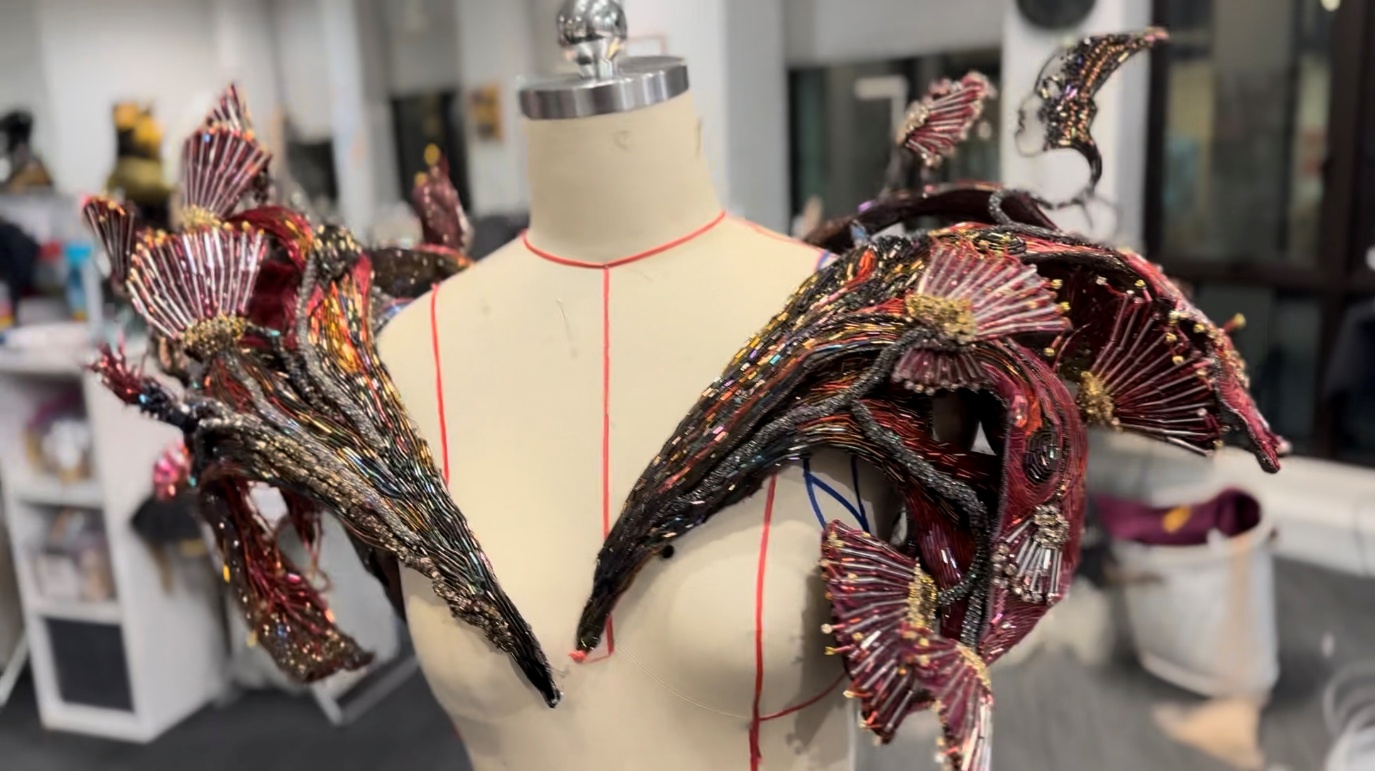
In an era increasingly shaped by automation, artificial intelligence, and digital production, I often find myself reflecting on the role of handcraft and why it continues to matter.
Many of my works require thousands of hours of construction. Millions of stitches, beads, knots, and carefully considered decisions accumulate over months and sometimes years. The process is slow, repetitive, and demanding. Yet it is precisely this investment of time that gives the work its meaning.
This research explores several questions:
- Why does handcraft still matter in a world driven by speed and efficiency?
- What aspects of making cannot be automated?
- Why do people continue to value objects created slowly by hand?
While technology has transformed how we design, communicate, and produce, it cannot easily replicate human intention, intuition, patience, or devotion. Every handmade object carries evidence of the maker’s presence. Small imperfections, material decisions, and countless accumulated gestures become part of the object’s identity.
Historically, craftsmanship has been one of the primary ways cultures preserve knowledge. Skills are passed from one generation to the next through observation, repetition, and practice. In this sense, craft is not only a method of production but also a form of cultural memory.
As an artist, I am interested in the relationship between time and value. The thousands of hours embedded within an artwork are not simply labour; they become part of the narrative itself. The making process becomes inseparable from the finished object.
This research continues to inform my practice and raises an ongoing question: in a world increasingly defined by technological advancement, might the handmade become even more significant as a record of human presence, care, and cultural continuity?
