Research
Year — 2025
Artist — Sheetol Chawla
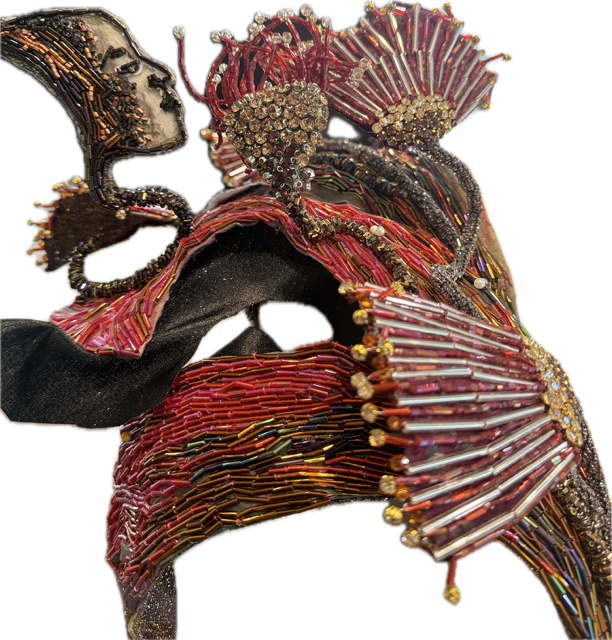
Medium — Wearable Sculpture
Materials — Millions of micro-stitches, hand beadwork, tube beads, sculptural wire structures, textile construction, mixed media
Dimensions — H 81 × W 38 × D 25 cm
Location of Inspiration — Te Rerenga Wairua (Cape Reinga), Aotearoa New Zealand
Archive Context — Culture as a Living Archive of Human Memory
The story, research, material development, and studio construction behind REINGA.
Cultural Context
The development of REINGA began with extensive research into the cultural, historical, and spiritual significance of Te Rerenga Wairua (Cape Reinga), one of the most sacred sites within Aotearoa New Zealand. Particular attention was given to Māori understandings of the wairua, ancestral connection, and the role of place within cultural memory.
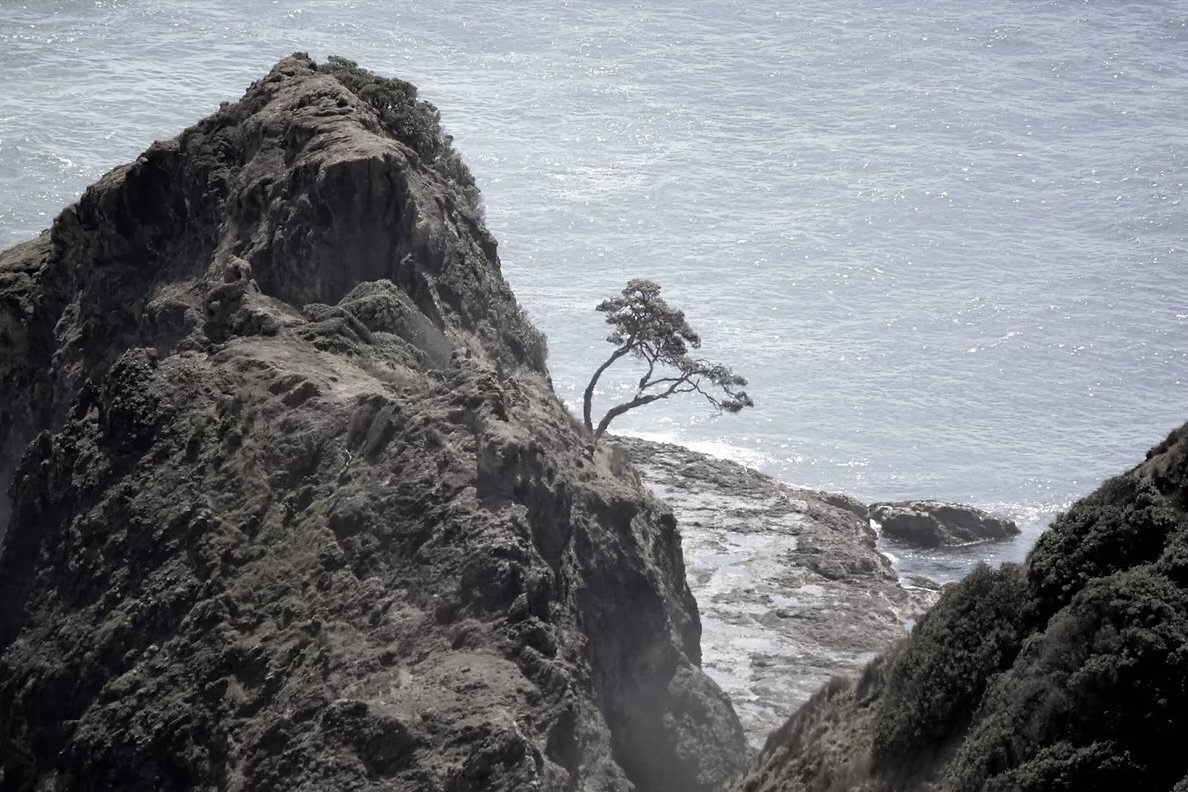
Central to the research was the ancient Pōhutukawa tree that stands on the cliffs of Cape Reinga. Believed to be more than eight centuries old, its roots feature prominently within Māori tradition as the pathway through which the wairua begins its journey toward Hawaiki, the ancestral homeland. The symbolism of roots, ancestry, continuity, and return became foundational concepts within the project.
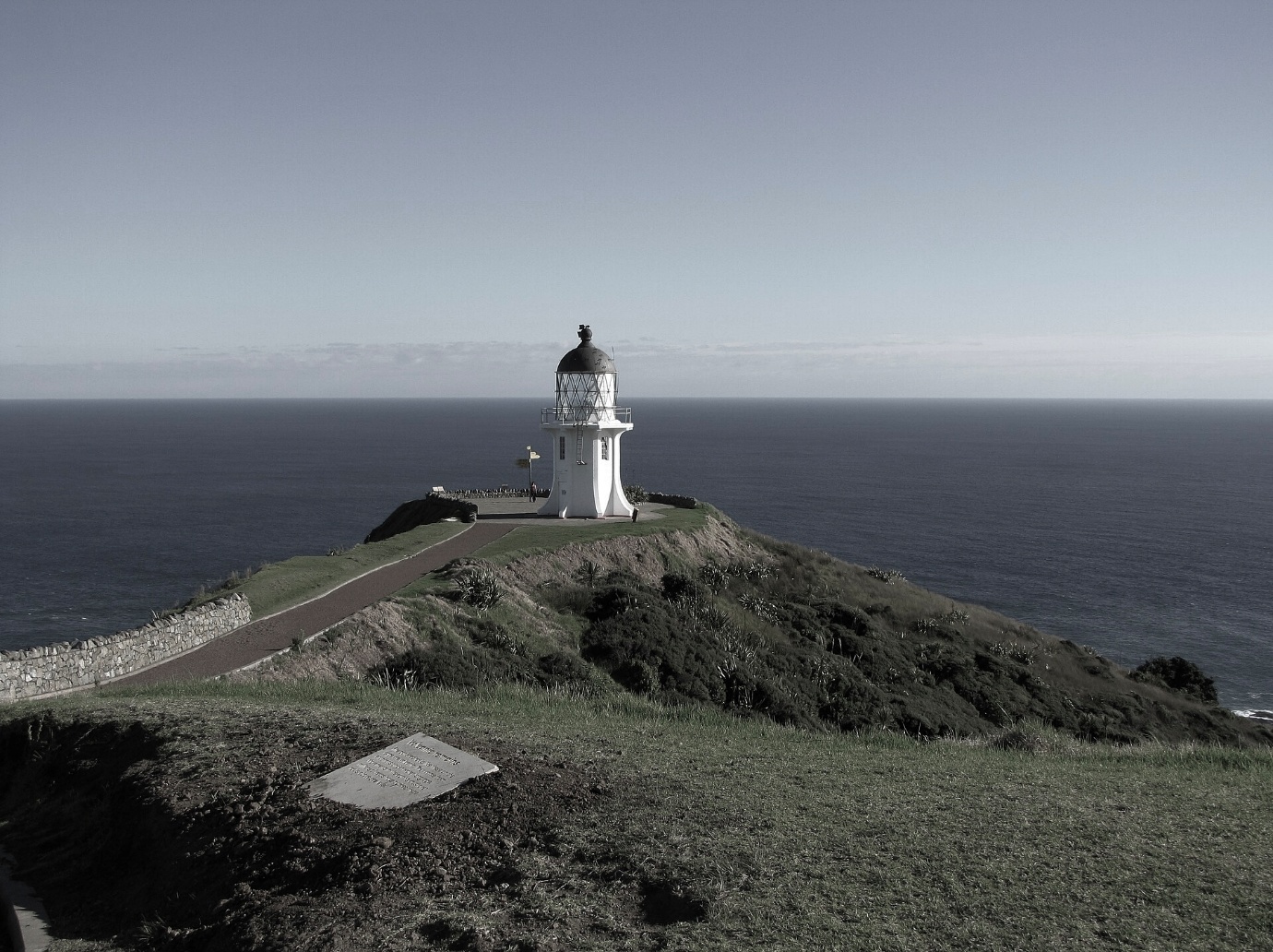
Cape Reinga Lighthouse, Te Rerenga Wairua. 2009,
Photograph: Gadfium, Coutesy Wikimedia Commons, Public Domain
Ancient pōhutukawa tree at Te Rerenga Wairua, Cape Reinga
Photograph reproduced from Tangata Whenua—Sidestep: The Spirit Tree,” 2018.
Source: Tangata Whenua /The first ones Blog.
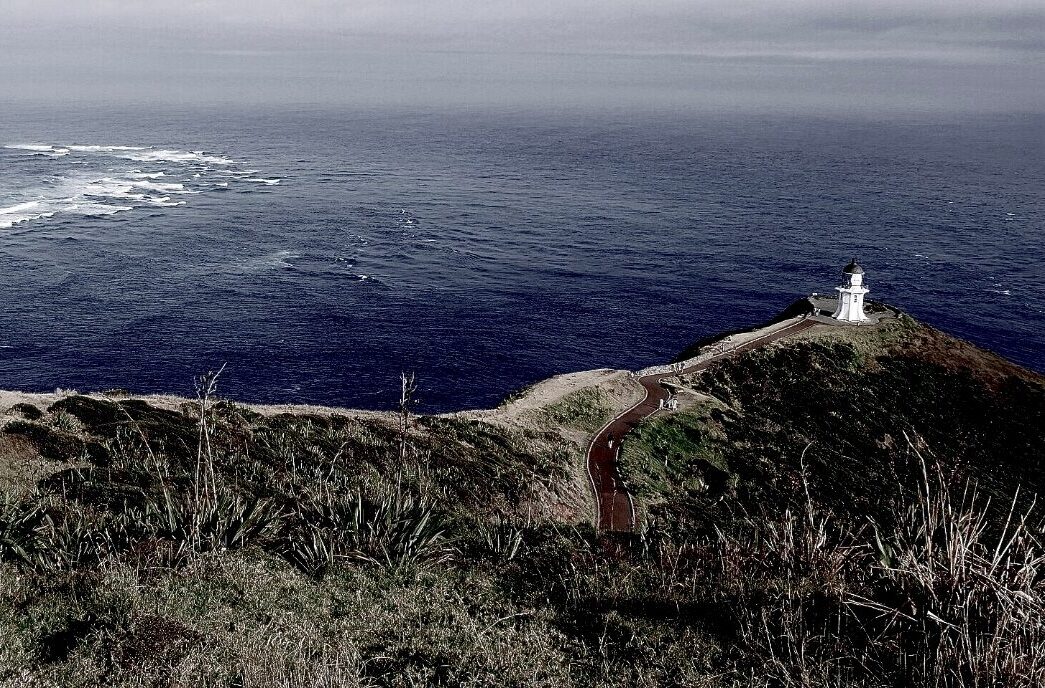
Te Reranga Wairua / Cape reinga and Columbia Bank, 2017
Photograph: Ulrich Lange
Courtesy Wikimedia Commons
Creative Commons CC By 3.0
Landscape Research
Research also focused on the physical environment of Cape Reinga. The meeting of the Tasman Sea and Pacific Ocean, the dramatic cliff formations, changing light conditions, ocean movement, and coastal vegetation informed the visual language of the work.
The landscape itself was studied as a living cultural environment where geography, spirituality, and collective memory intersect.
Symbolic Research
Key themes explored throughout the research process included Wairua (Spirit), Ancestry, Journey, Belonging, Home, Cultural Memory, Continuity, Return, Connection to Place. These concepts informed both the narrative framework and the visual development of the work.
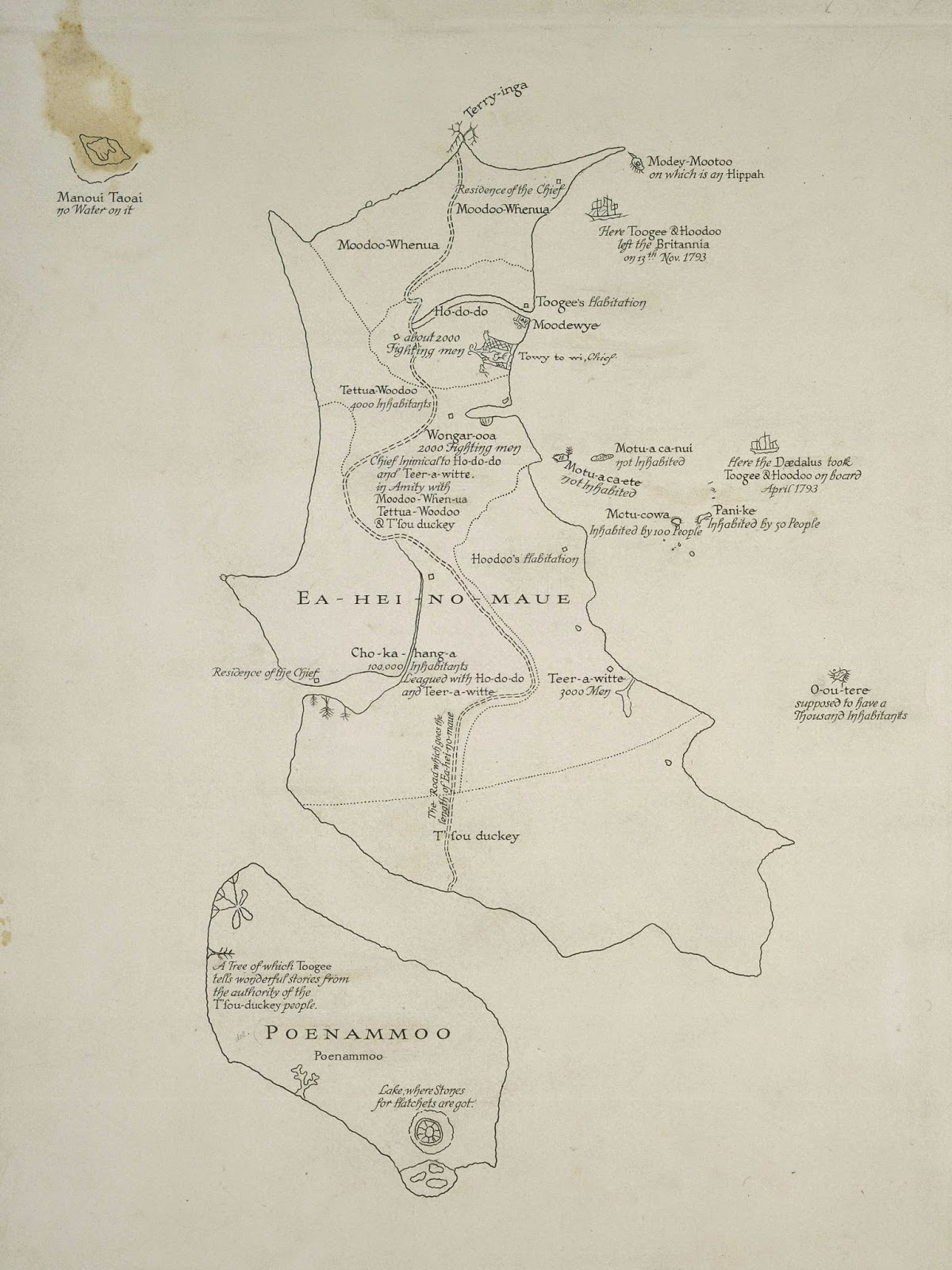
Map of Aotearoa after Tuki Te Terenui Whare Pirau, 1793.
The dotted pathway terminating at Te Rerenga Wairua records the journey of the wairua, connecting physical geography with ideas of spiritual passage and return. The map was incorporated into the research as an important historical reference for understanding how journey, place, and spiritual geography intersect within the narrative surrounding Te Rerenga Wairua.
Source: Alexander Turnbull Library, National Library of New Zealand.
Reference: MapColl-830ap/[1793]/Acc.29414.
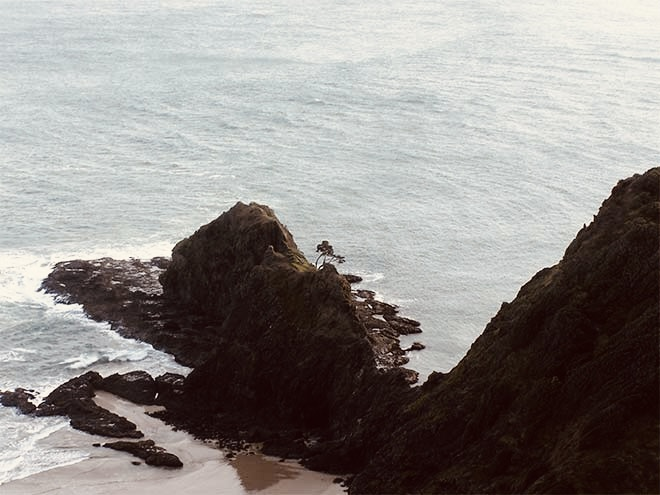
Ancient pōhutukawa, Te Rerenga Wairua (Cape Reinga), Aotearoa New Zealand.
The ancient pōhutukawa clinging to the headland holds profound significance within traditions associated with Te Rerenga Wairua. Wairua are understood to descend by its roots toward the sea as they begin their final passage toward the ancestral homeland of Hawaiki. DOC describes the tree and headland as central to this spiritual journey.
Why incorporated
The pōhutukawa became an important research reference for REINGA because it brings together wairua, place, departure and ancestral connection. Its position between land and ocean helped me consider the idea of a threshold — a point of transition between the physical landscape and an ongoing spiritual journey.
Source: Department of Conservation / Te Ara — The Encyclopedia of New Zealand.
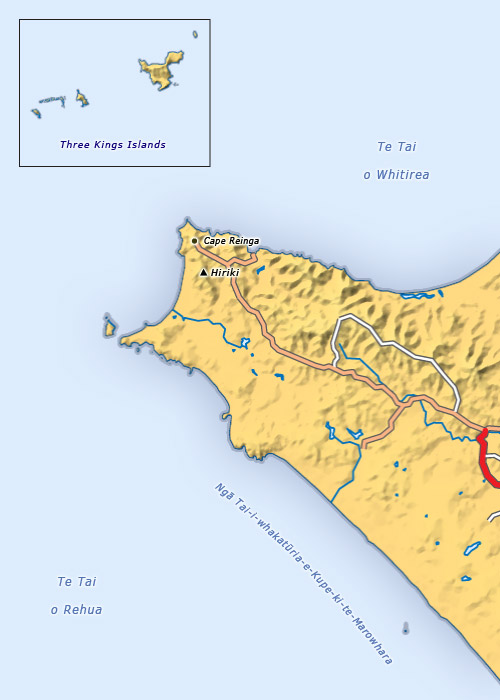
Map of Te Rerenga Wairua (Cape Reinga) and Manawatāwhi (Three Kings Islands), Te Hiku o Te Ika, Aotearoa New Zealand.
The map locates Te Rerenga Wairua in relation to the surrounding seas and Manawatāwhi. Ngāti Kurī accounts describe the wairua departing Te Rerenga Wairua and travelling towards Ōhau at Manawatāwhi, where it looks back towards Aotearoa before continuing its journey towards Hawaiki.
Why incorporated
This map was incorporated into the research to understand the narrative through geography and movement. It helped situate Te Rerenga Wairua not simply as a single point of departure, but within a wider spiritual landscape connecting whenua, moana, Manawatāwhi and the continuing journey of the wairua.
Source: Basil Keane, Traditional Māori religion – ngā karakia a te Māori – Spiritual concepts, Te Ara – the Encyclopedia of New Zealand, https://teara.govt.nz/en/interactive/30796/te-rerenga-wairua (accessed 18 August 2026).
Story by Basil Keane, published 28 April 2011.
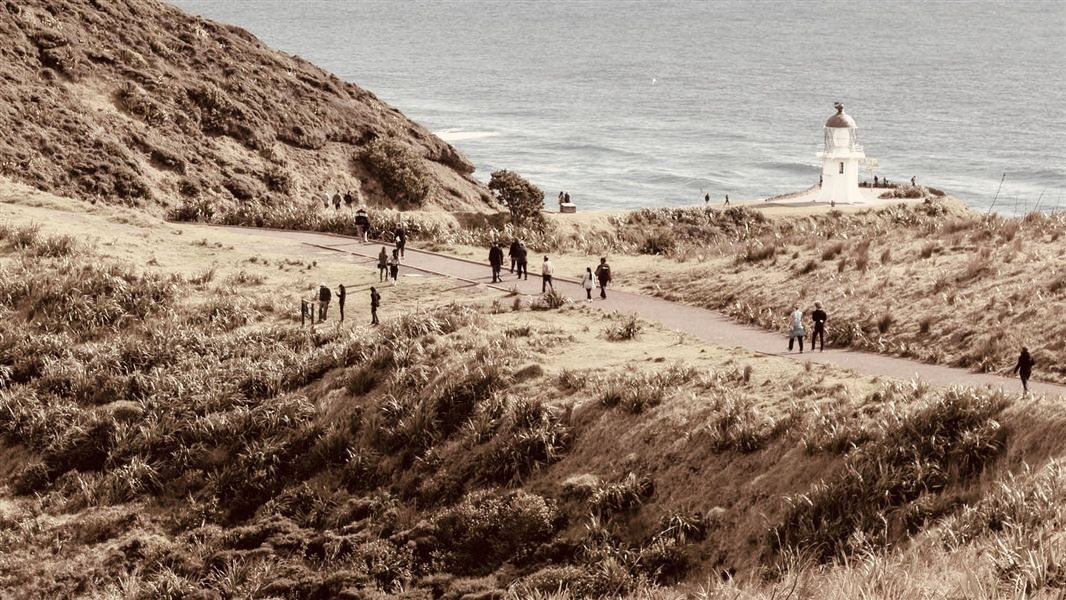
Te Rerenga Wairua (Cape Reinga), Te Hiku o Te Ika, Aotearoa New Zealand.
The headland of Te Rerenga Wairua occupies a profound place within Māori spiritual tradition. Associated with the final journey of the wairua, the landscape brings together whenua and moana at a place understood as a threshold between the physical world, ancestry, and spiritual continuation.
Why incorporated
This image was incorporated into the research to understand place as an active part of cultural memory. The pathway moving through the landscape towards the headland offered a visual reference for ideas of passage, transition and departure, while the meeting of land and ocean helped inform the broader spatial language of REINGA.
Source: Te Hiku o Te Ika, Aotearoa New Zealand.
Reinga: Where Light Meets Spirit
Unveiling Reinga: an artifact born from one of the most profound and sacred Iwi Māori beliefs — the final journey of the wairua, the spirit, beneath the ancient Pōhutukawa tree at Cape Reinga.
For over eight centuries, its twisted roots have clung to the cliffs of Cape Reinga — Te Rerenga Wairua — the sacred gateway where Māori believe every spirit begins its final journey home.
At the northernmost edge of Aotearoa, where the Tasman Sea meets the Pacific Ocean in a collision of silver and deep blue, Cape Reinga stands as a spiritual threshold. According to Māori tradition, this is the place where every soul pauses, gathers its final breath of this world, and descends through the roots of the Pōhutukawa to begin its passage toward Hawaiki, the ancestral homeland.
Reinga captures this powerful moment — the meeting of worlds, the stillness before departure, and the luminous pull of home. Its sculptural form pays homage to the ancient tree that has stood for centuries, witnessing the return of countless generations.
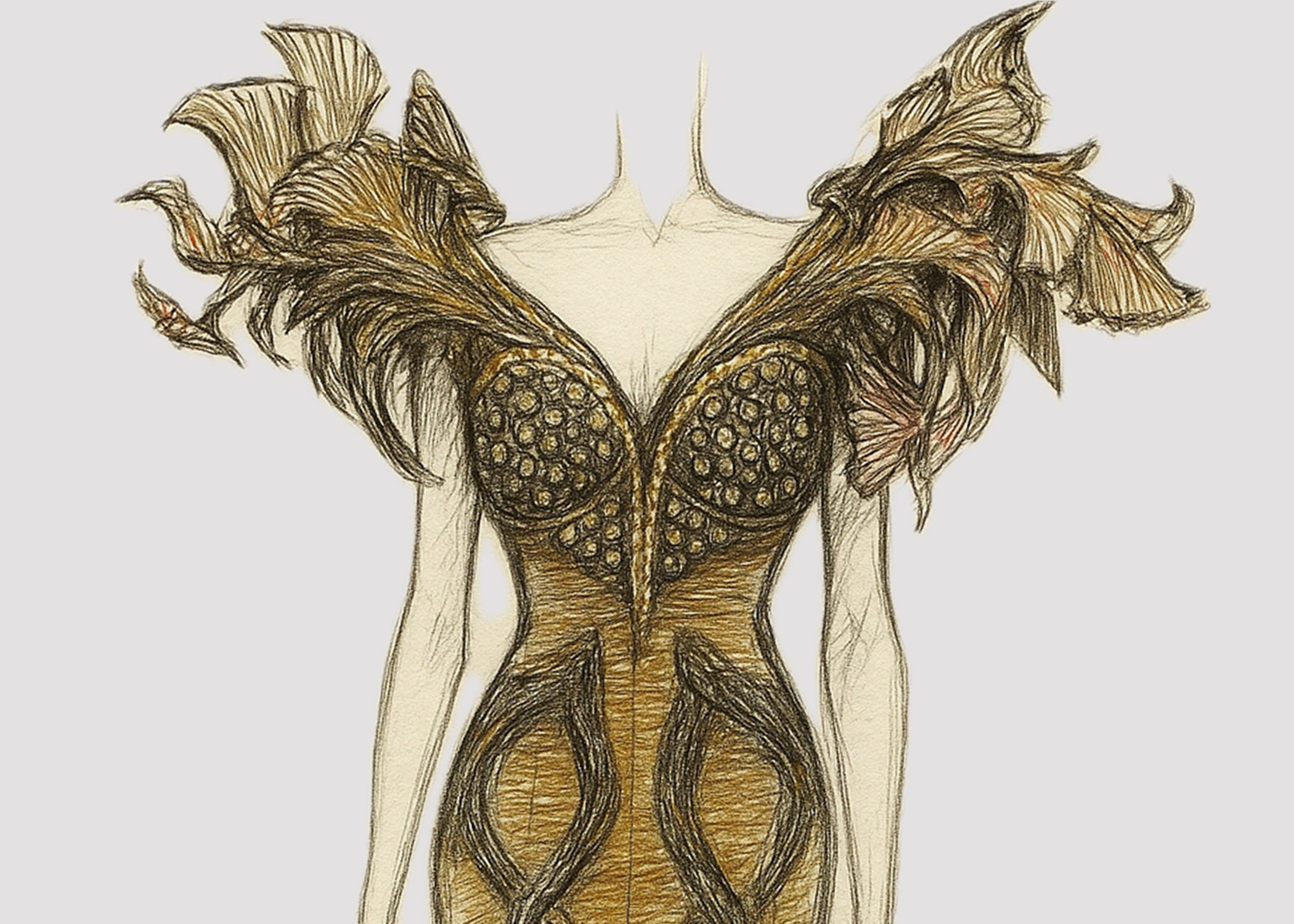
Every curve, every texture, every glimmer is designed to evoke the sacred landscape — the cliffs, the wind, the restless ocean, and the spiritual pathway that binds life to eternity.
Reinga is not merely a national artifact. It is a ceremonial creation, a cultural homage, and a storytelling masterpiece. A gown that honours memory, lineage, and the invisible threads that connect us to those who came before.
This belief is not a myth; it is a map of love, loss, and eternal return, translated into a wearable sculpture.
Material Exploration and Construction
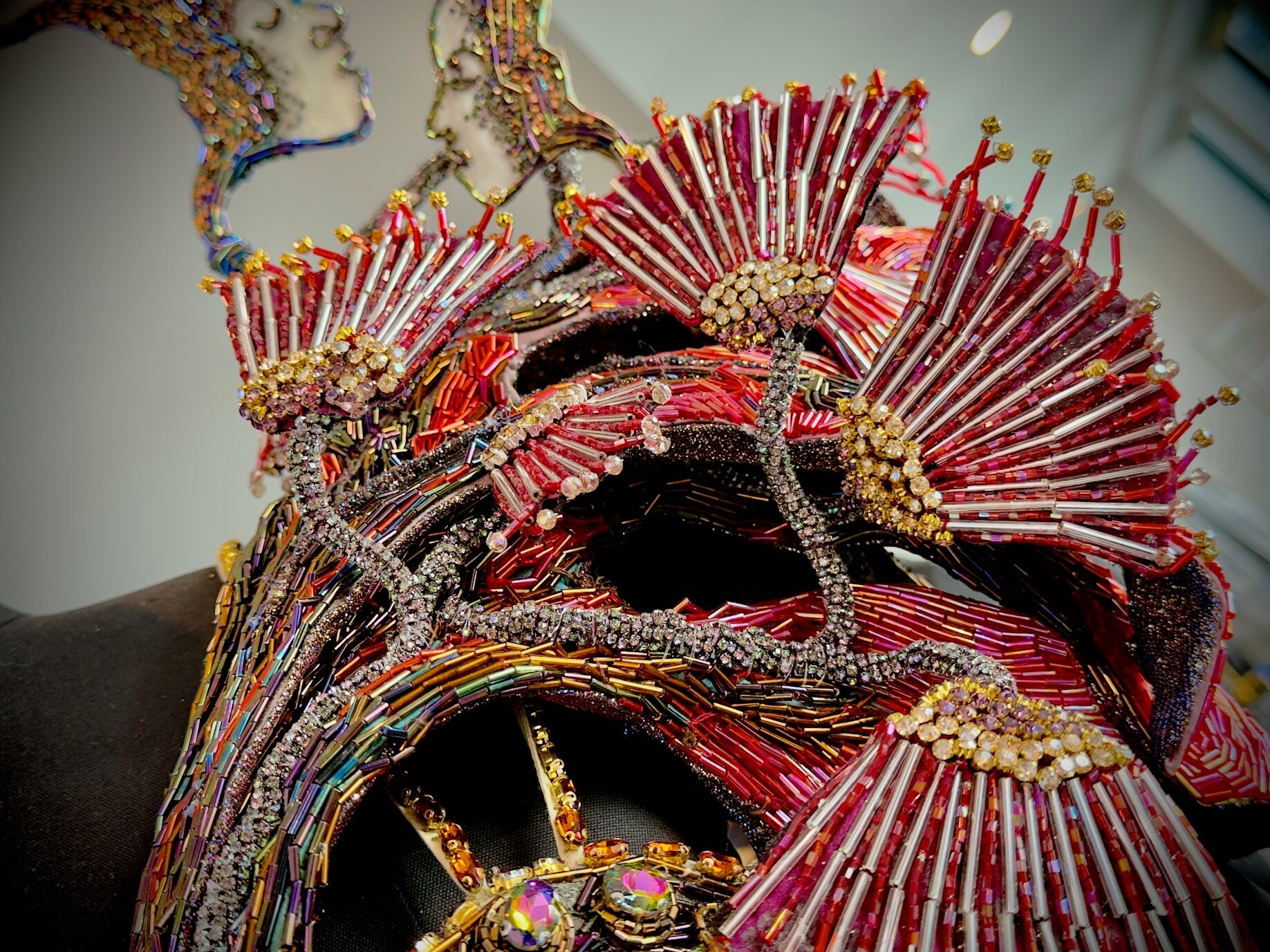
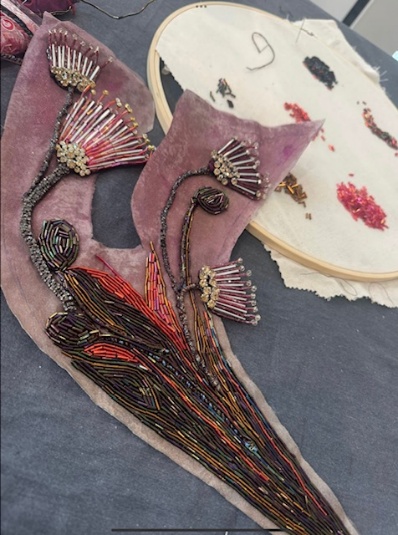
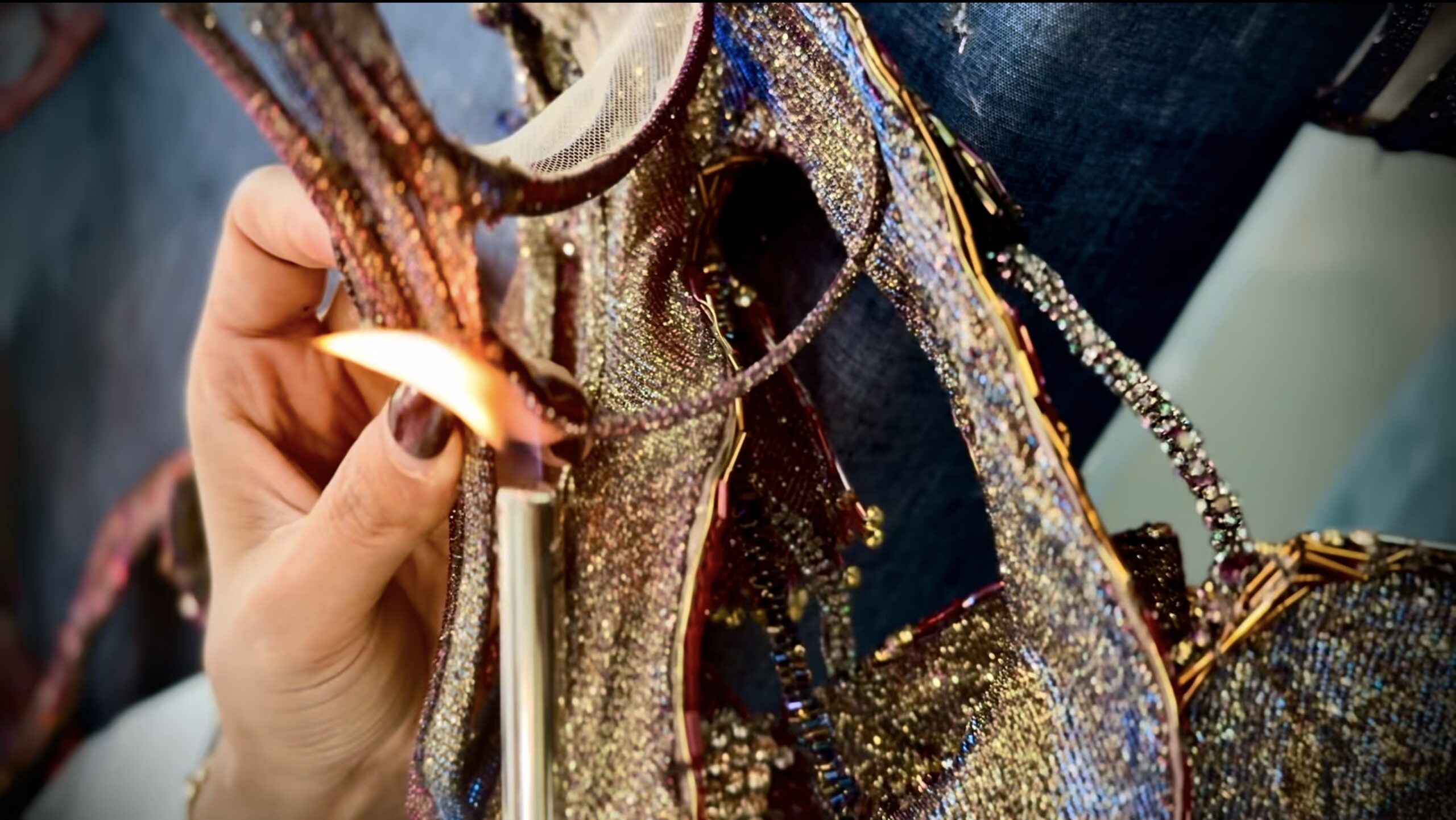
The final work was realised through extensive handcraftsmanship, incorporating embroidery, beadwork, sculptural structures, and layered construction techniques. Materials were selected for their ability to capture light, create movement, and communicate the sense of transition that sits at the heart of the narrative.
Through this process, REINGA evolved from cultural research into an immersive artwork that seeks to honour the relationship between memory, place, ancestry, and spirit.
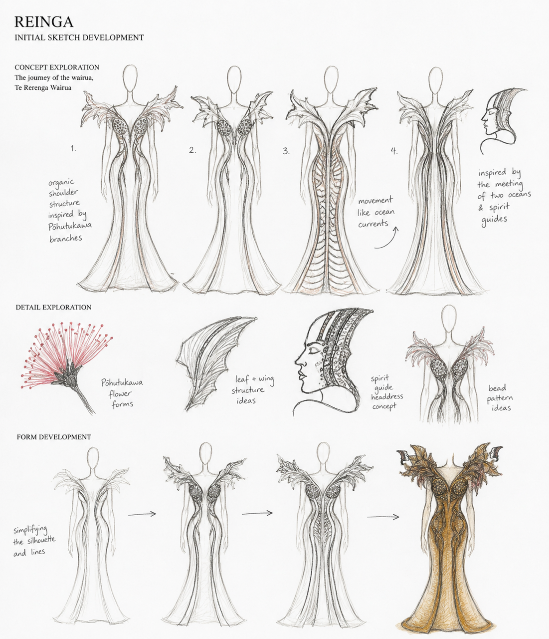
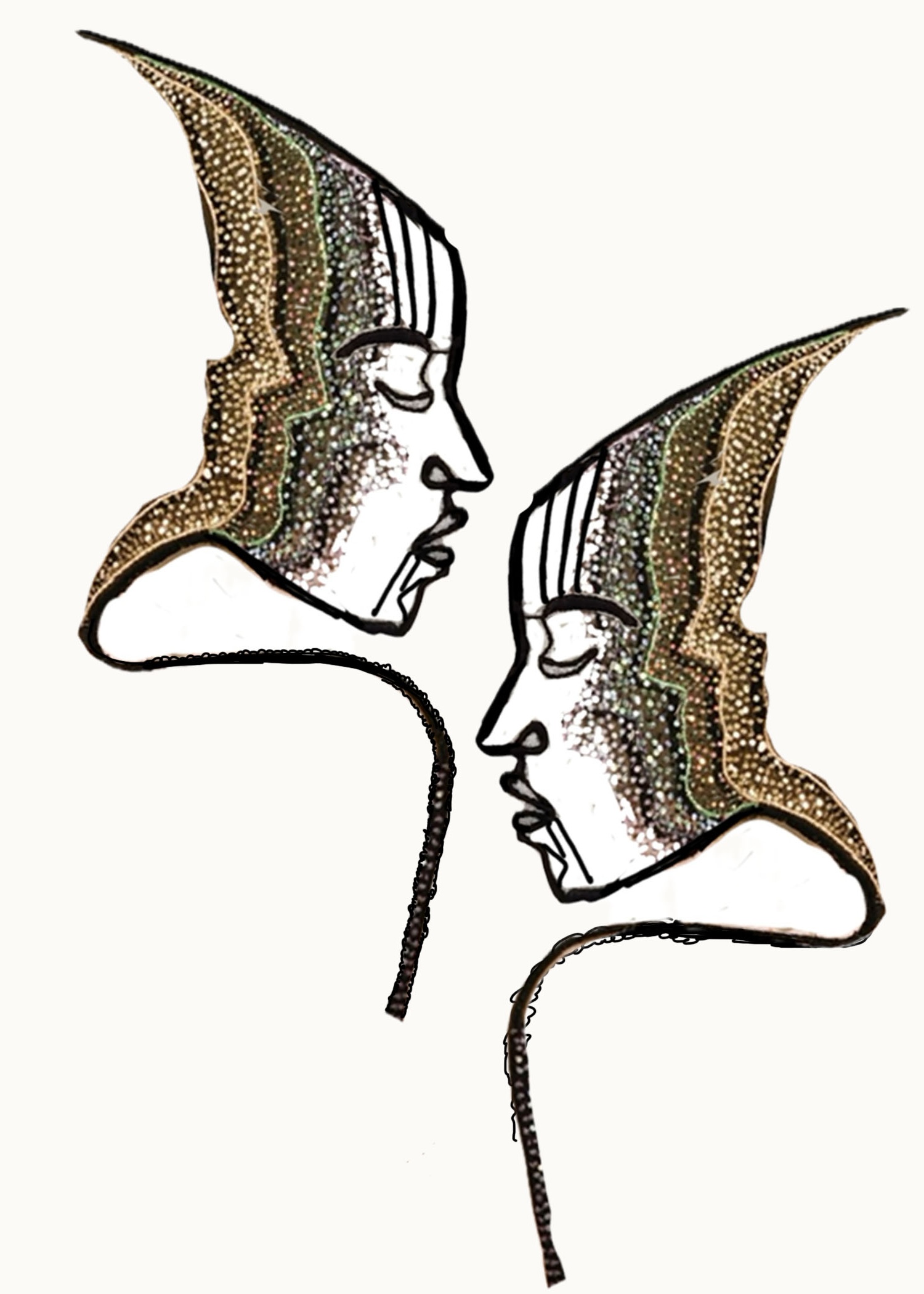
REINGA evolved through research, drawing and studio experimentation — translating observations of place, movement and memory into a sculptural language shaped by hand.
Sheetol Chawla Studio Archive · Aotearoa New Zealand · 2025