Research
Year: 2025
Artist: Sheetol Chawla
Medium: Wearable Sculpture
Materials: Textile construction, mixed media.
Dimensions: (…. )
Location of Inspiration: Aotearoa New Zealand
Cultural Context
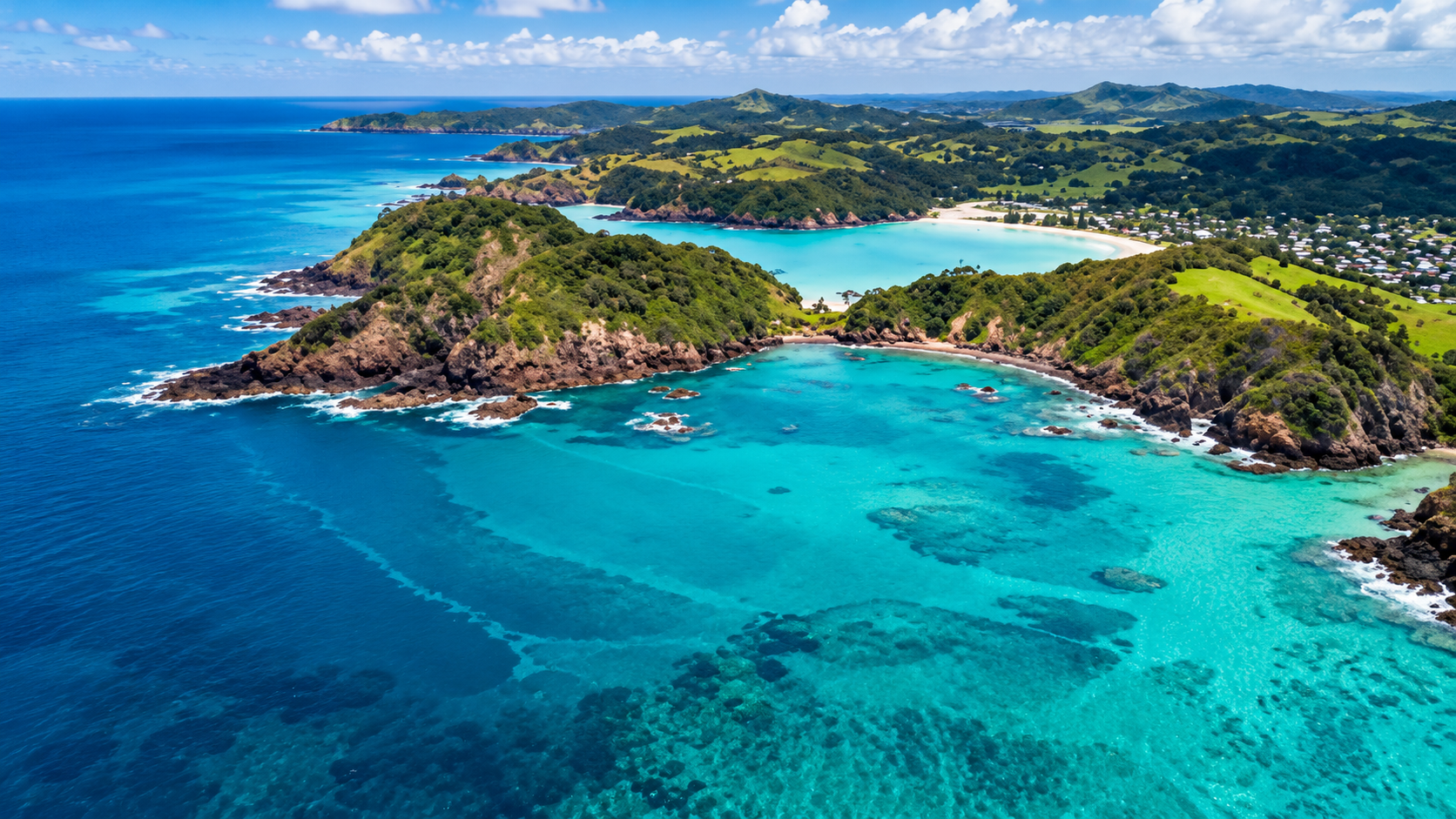
The development of MOANA was informed by research into Aotearoa New Zealand’s oceanic identity and the enduring relationship between people and the sea. The project explored the ocean not only as a natural environment, but as a cultural, historical, and symbolic space that has shaped movement, connection, and exchange throughout human history.
Particular attention was given to the role of the Pacific Ocean as a pathway linking communities, cultures, and knowledge systems across vast distances. Research examined themes of navigation, migration, belonging, and cultural continuity, as well as the ways oceans have facilitated dialogue and connection between nations for generations.
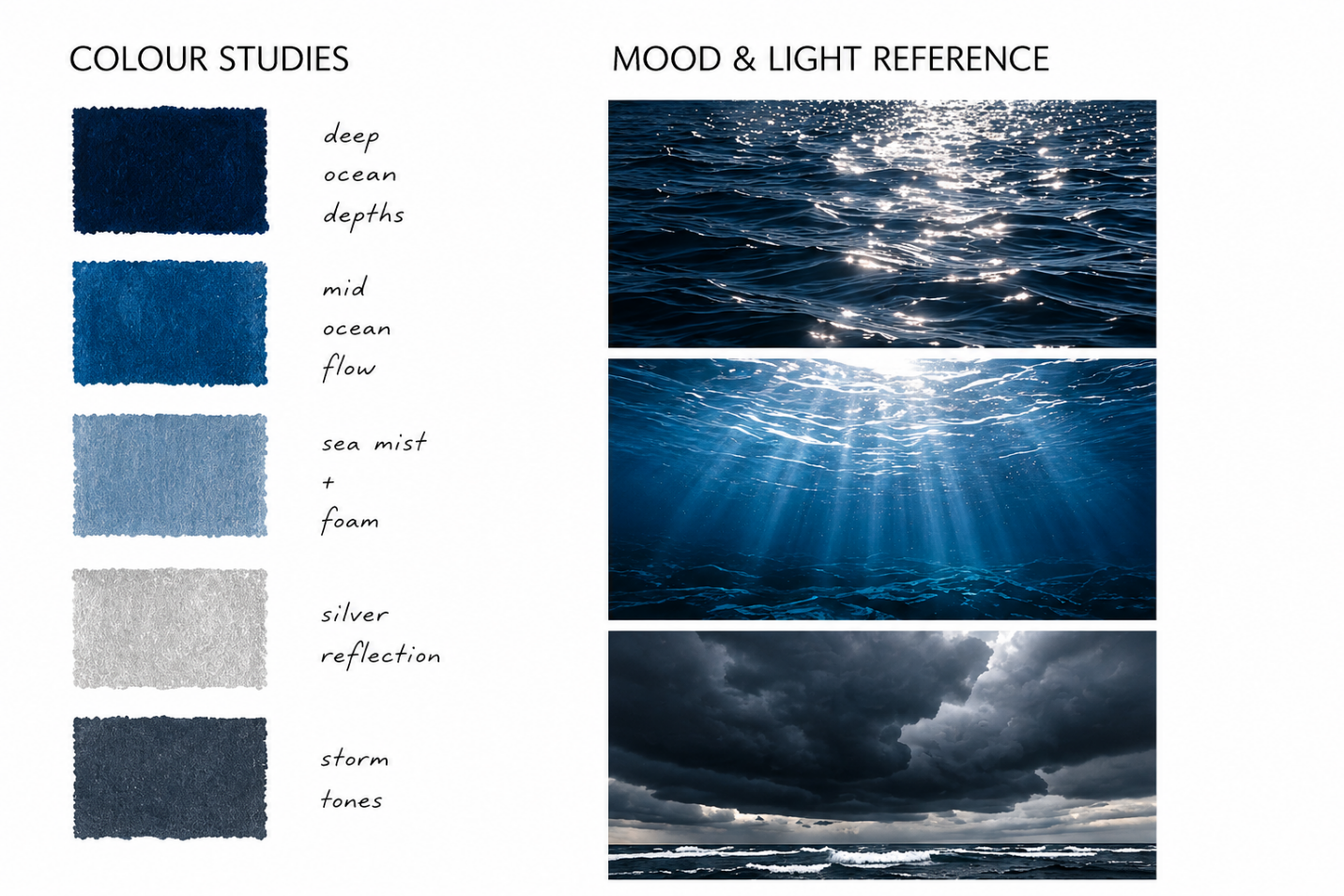
The visual development of the work was influenced by studies of ocean currents, coastal landscapes, changing light conditions, and the interaction between water and atmosphere. These observations informed the movement, rhythm, colour palette, and sculptural language of the final artwork.
Throughout the research process, the ocean emerged as both a physical and symbolic presence—representing connection rather than separation, and reflecting the ongoing relationships between people, place, memory, and identity.
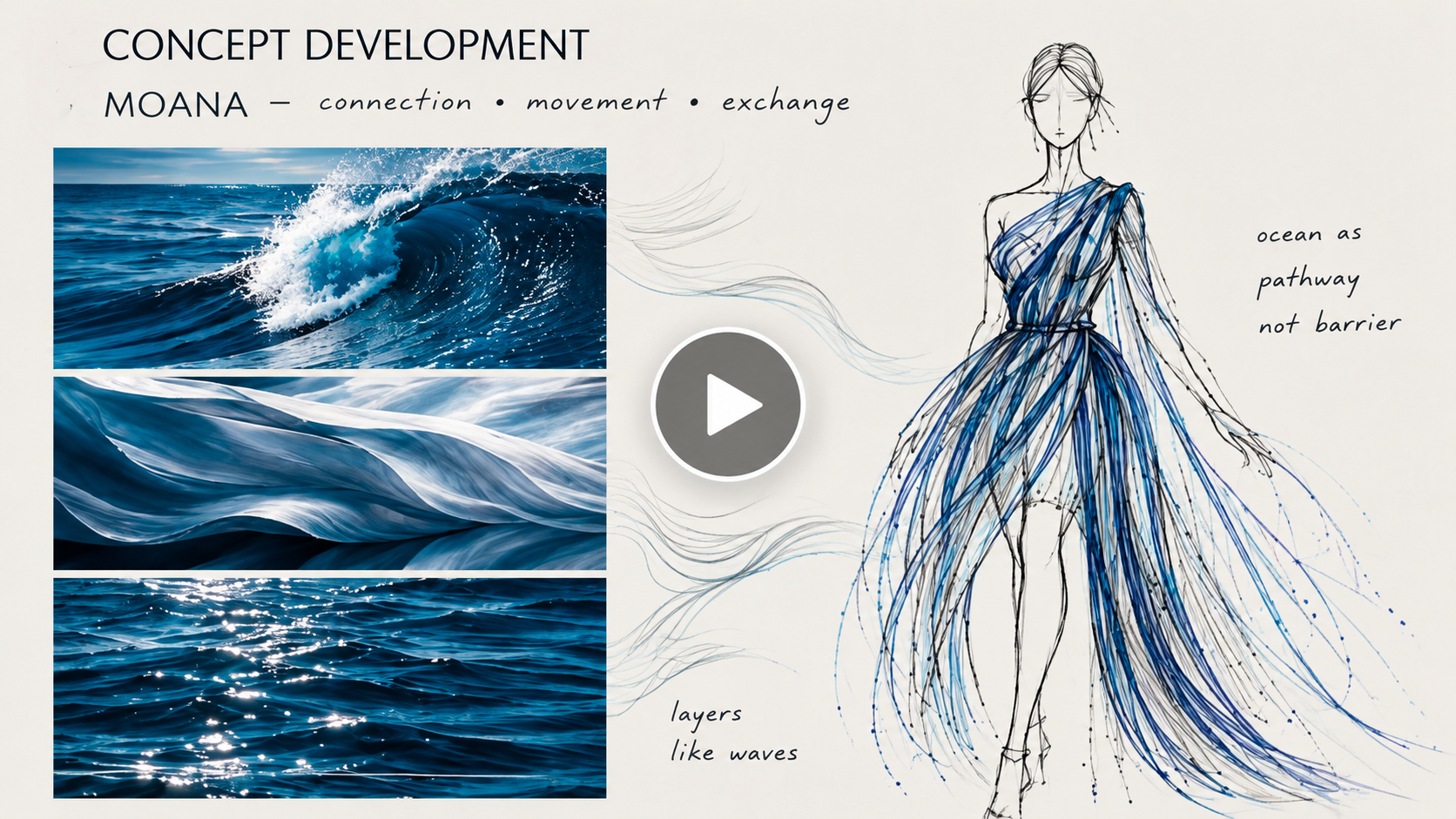
Research film documenting the cultural, environmental and conceptual references that informed the development of MOANA.
Design Development
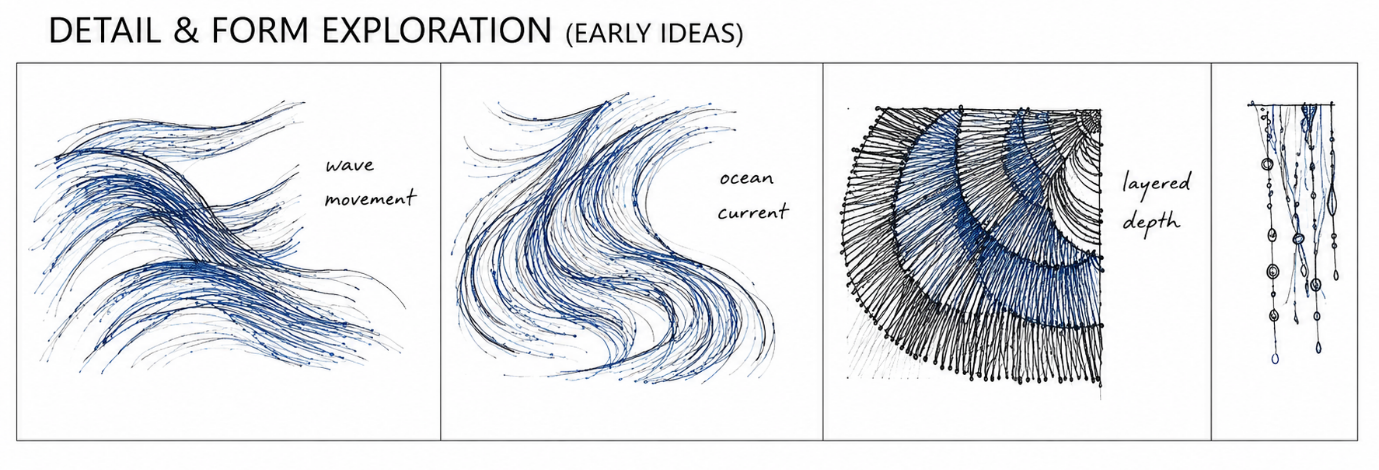
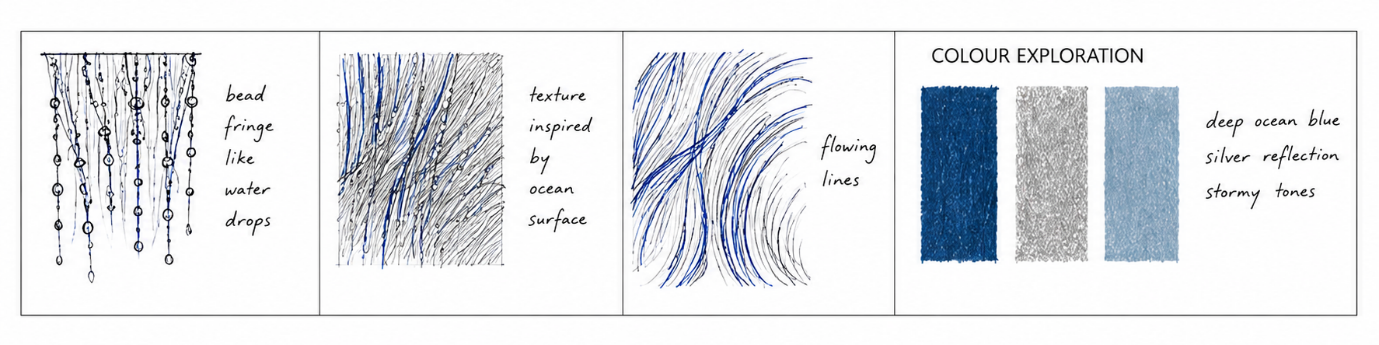
MOANA evolved through an iterative process of sketching, experimentation, and structural exploration. Early concepts focused on translating the movement and energy of the ocean into sculptural form, seeking a balance between fluidity, strength, and elegance.
The silhouette underwent multiple stages of refinement as ideas drawn from waves, currents, and ocean movement were transformed into a wearable structure. Colour studies explored the relationship between deep ocean blues, silver reflections, and shifting light across the water’s surface, while material experiments investigated ways of capturing movement, depth, and luminosity.
Rather than creating a literal representation of the ocean, the development process sought to evoke its emotional and symbolic qualities, allowing the work to communicate themes of connection, migration, and cultural exchange through form, texture, and movement.
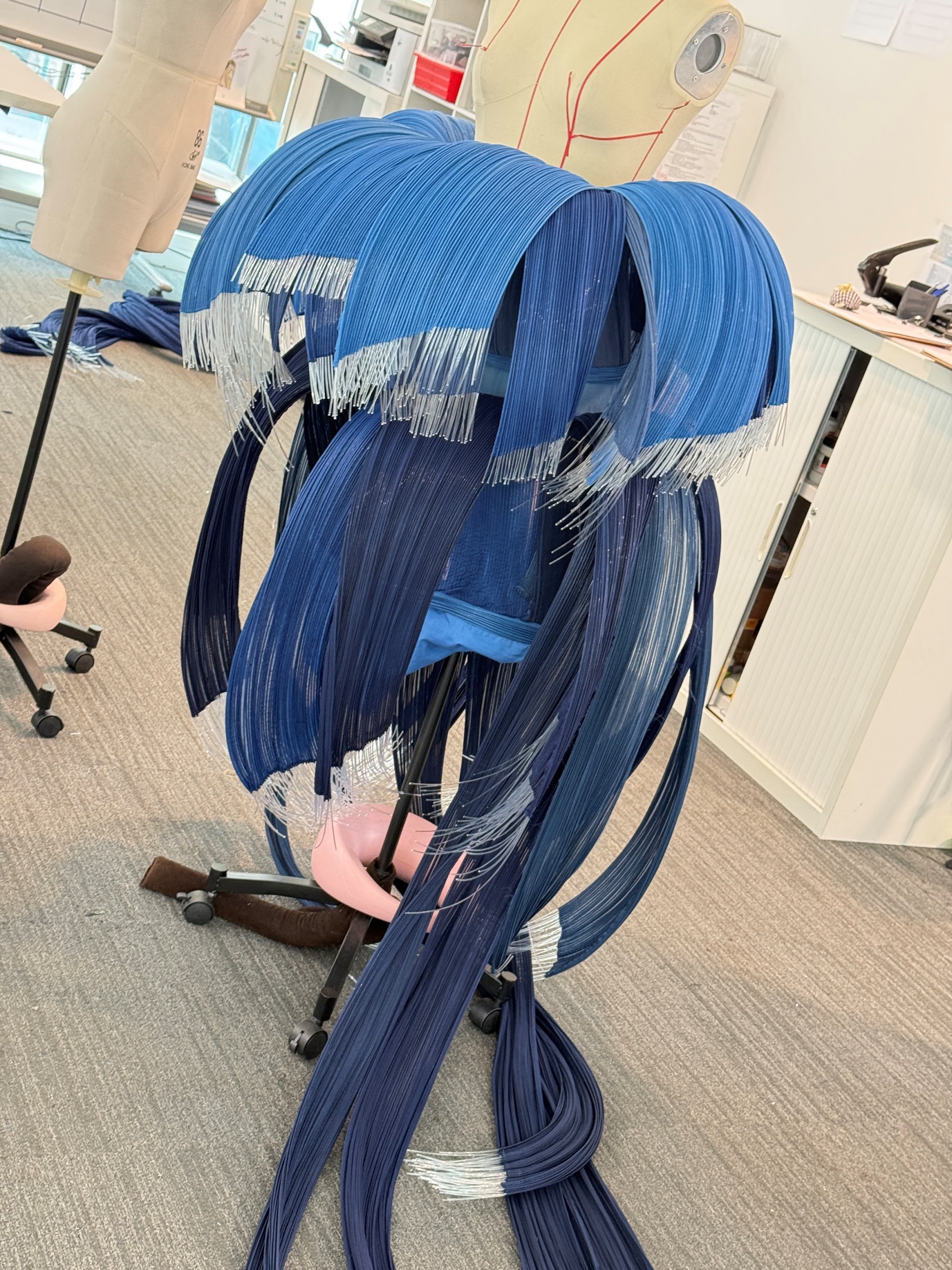
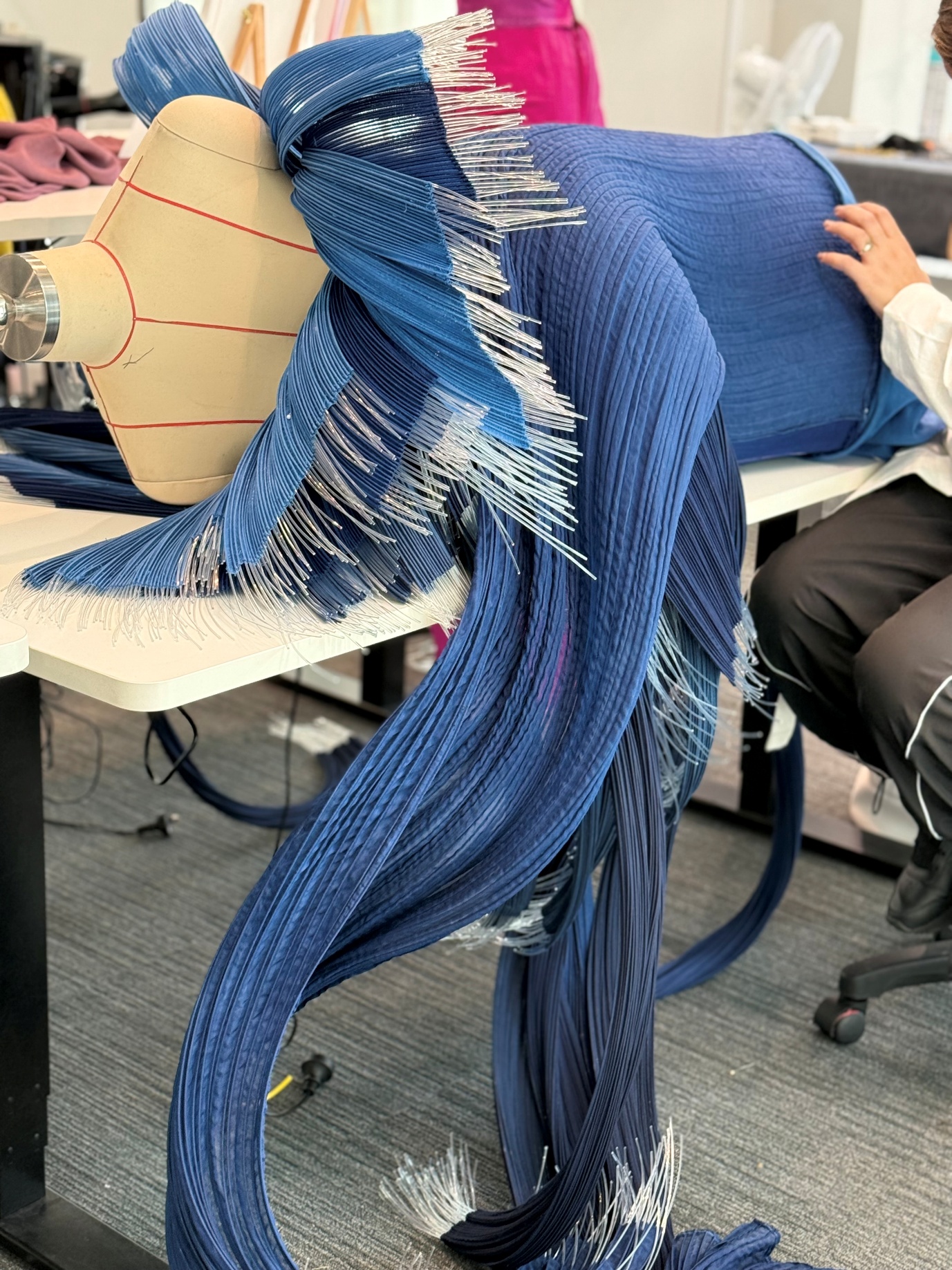
Studio documentation tracing the evolution of MOANA from early concepts and material experiments to its sculptural form, translating the movement, rhythm, and fluidity of the ocean into wearable structure.
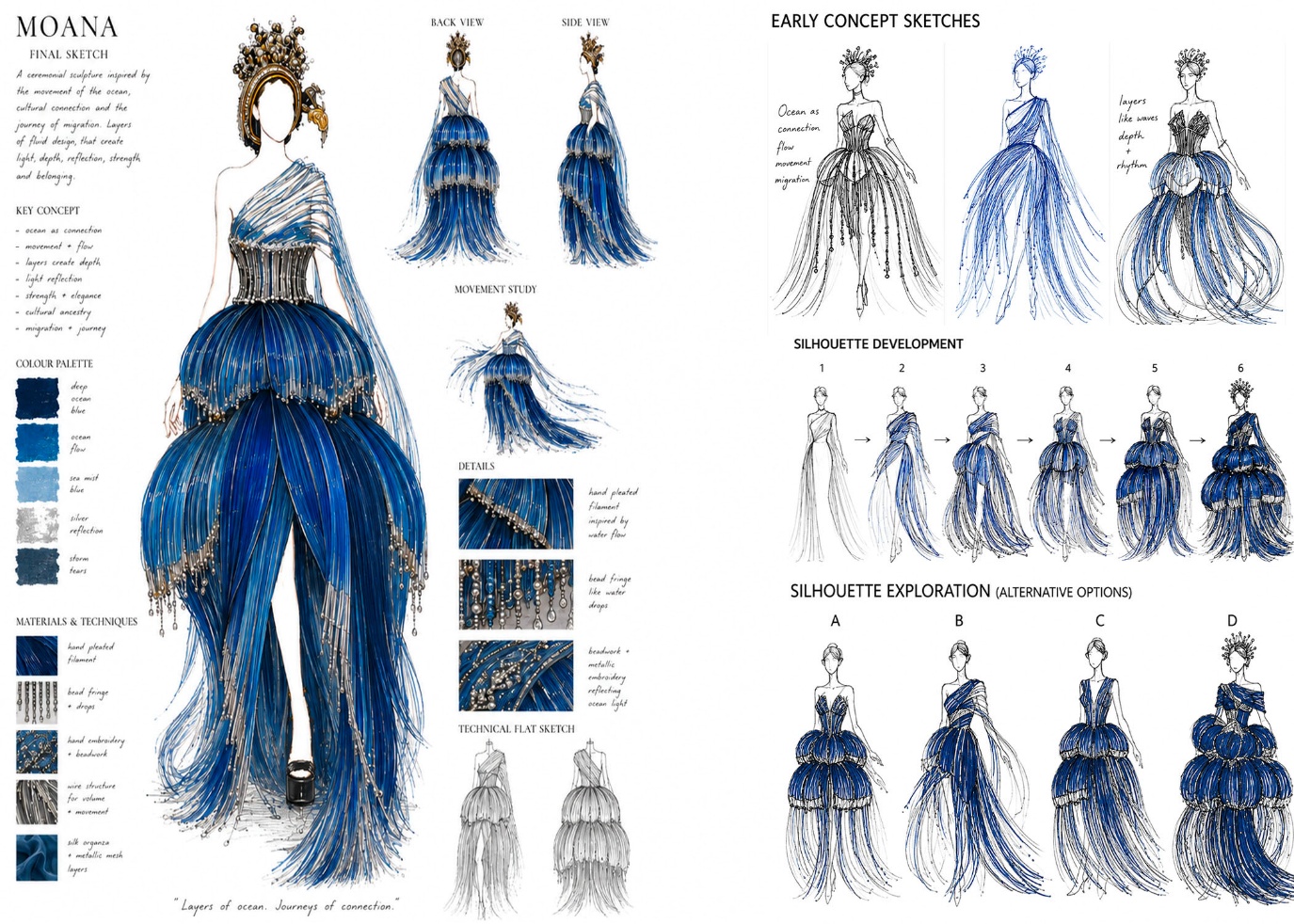
Material Exploration and Construction
The creation of Moana involved an extended process of material experimentation, during which bespoke textiles were developed specifically for the project.
To capture the movement, depth, and luminosity of Aotearoa’s surrounding oceans, raw silk was hand-dyed in multiple shades of blue, ranging from deep ocean tones to lighter coastal hues. Rather than relying on commercially available fabrics, these individually dyed elements were combined with fine fishing line to create a custom textile language unique to the work.
The silhouette was constructed through the layering of numerous weighted textile panels, carefully engineered to project away from the body and create a sense of suspended movement. These layered forms were designed to echo the rhythm of ocean currents and waves, allowing the sculpture to shift and respond as the wearer moved through space. The resulting structure produces a visual sensation of fluidity while maintaining its sculptural presence.
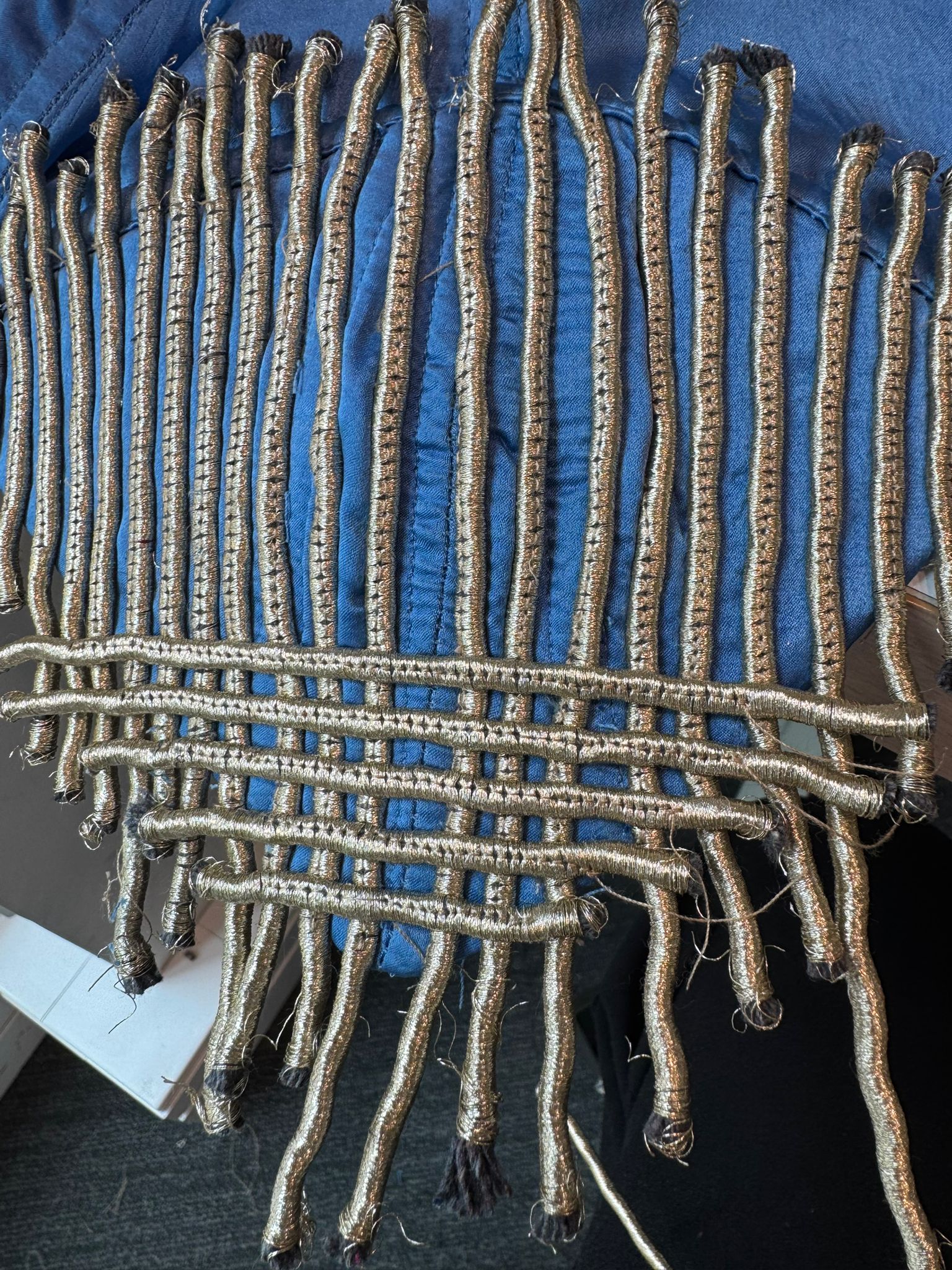
The corset underwent its own process of surface development. A custom textile was created through the application of specialised trims arranged in flowing linear formations inspired by tidal pathways and ocean currents. Hand-applied beadwork was incorporated throughout the bodice, particularly across the bust area, introducing points of reflection that mimic the way light dances across the surface of water.
Throughout the work, structure and ornament were treated as equal elements. Textile manipulation, engineered volume, hand embellishment, and material innovation were combined to transform traditional garment-making processes into a wearable sculptural form. The final result is a surface that simultaneously communicates movement, depth, reflection, and the ever-changing nature of the ocean itself.
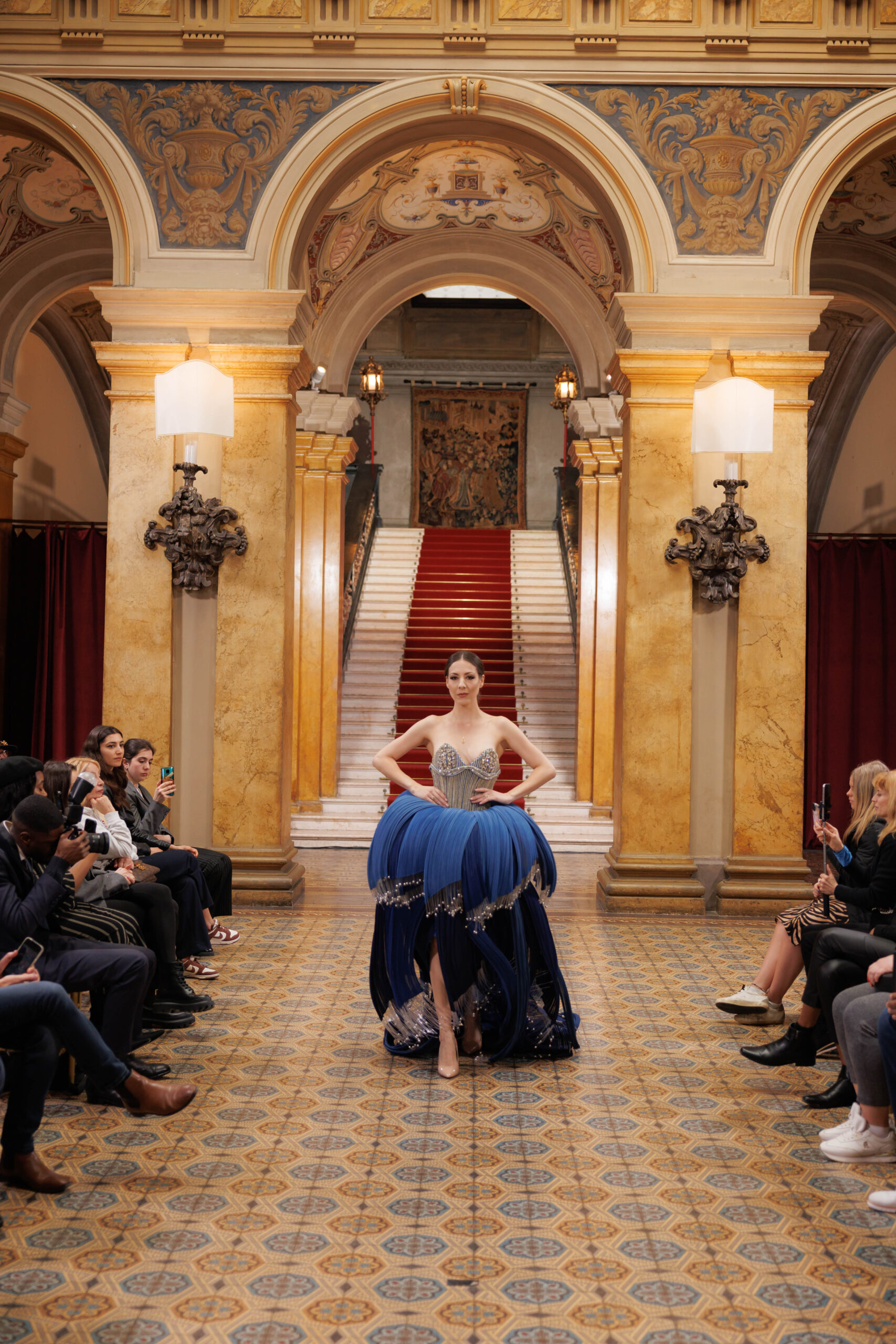
Studio documentation of material experimentation, textile construction and the development of MOANA’s sculptural structure.